
Last updated November 15, 2026
 Wrought iron
 Wood & steel frame
 Farm & ranch
 Sliding driveway gates
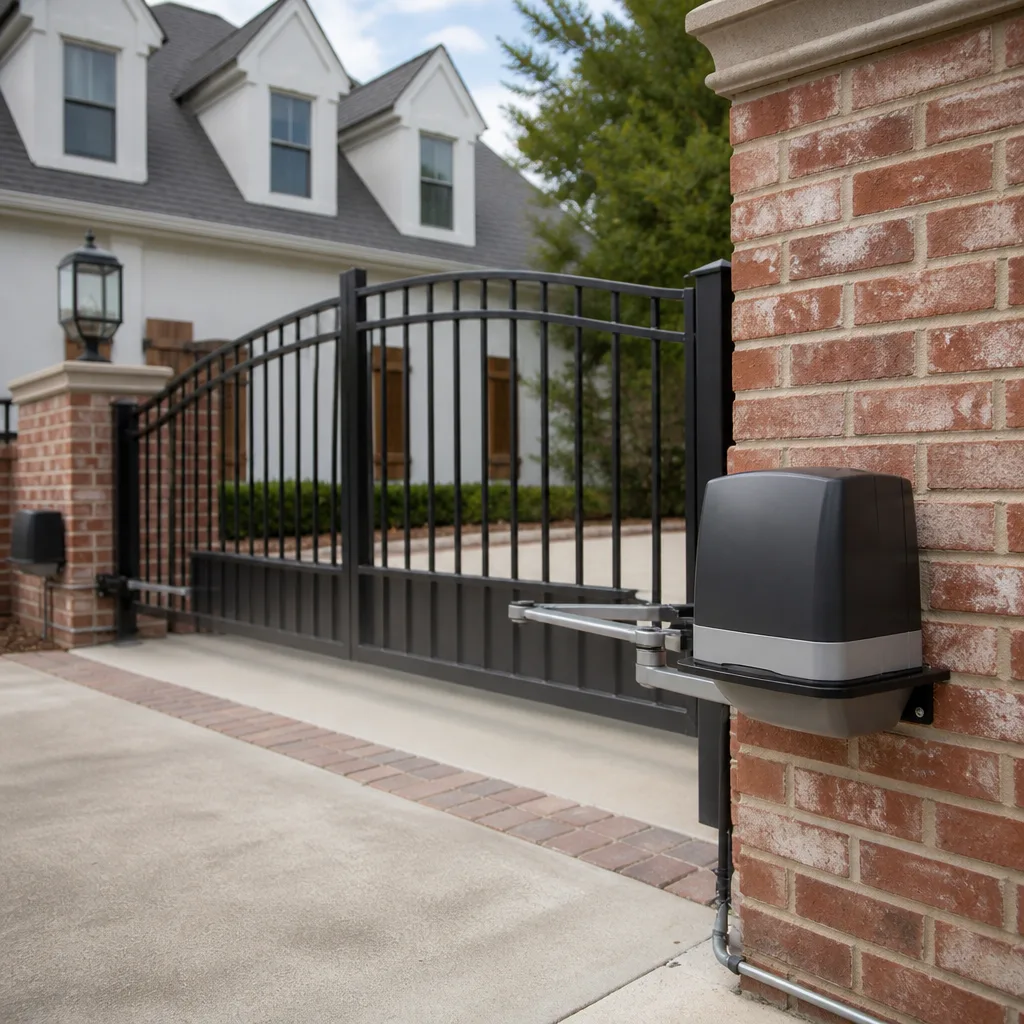 LiftMaster operators
Free on-site gate assessment - hinges, posts, and your LiftMaster or Nice gate operator checked before anything is quoted
The assessment is free and the quote is the invoice.
Get your free estimateSeasonal Gate Repair Care for Arlington: Year-Round Homeowner’s Guide
Arlington’s worst gate damage rarely happens during a storm. It happens in the quiet stretches – a January freeze pushing a post a fraction of an inch, a muggy August afternoon quietly eating at a control board terminal, an October rain soaking leaves into a slide track until the motor has to fight for every inch of travel. None of it looks dramatic. All of it compounds. By the time a gate drags or an operator quits, the cause is usually months old, which is why the repair bill lands in spring for something winter caused. In this guide we walk through the four seasons of gate care here in Arlington, season by season, and show you how a simple log turns guesswork into a picture you can actually act on.
Quick Answer
Seasonal gate care in Arlington means matching your work to the season’s main failure mode: winter freeze-thaw moves posts and stresses operators, spring thaw is when you inspect for that movement, summer humidity corrodes steel and control electronics, and fall leaf debris fouls slide-gate tracks. The single highest-value habit is a written seasonal log of post position, hinge condition and operator behavior, so you catch slow drift before it becomes a full reinstall.
Styles & brands we work with
- Wrought iron
- Wood & steel frame
- Farm & ranch
- Sliding driveway gates
- LiftMaster operators
Table of Contents
- Why Arlington’s Seasons Stress Gates Differently
- Winter: What to Do Before the First Hard Freeze
- Spring: The Post-Thaw Inspection Sequence
- Summer: Humidity, Corrosion, and Control Boards
- Fall: Slide-Gate Tracks and Wet Leaves
- How to Build a Seasonal Gate Log
- What Your Operator Brand Tells You About Seasonal Risk
- Common Mistakes to Avoid
- When to Call a Professional
- Frequently Asked Questions
Why Arlington’s Seasons Stress Gates Differently
A gate is a mechanical system bolted to a footing, driven by an electric motor, and expected to move the same way every day for years. In a climate that swings between freezing and thawing through the winter, that expectation meets reality. Arlington sits in a Mid-Atlantic pattern: cold enough in winter for the ground to freeze and thaw repeatedly, humid enough in summer for steel to corrode in the joints and terminals where you can’t see it. Those two facts drive most of the seasonal problems we diagnose.
The single most misunderstood point is the footing. A gate post isn’t just a stake in the ground. In a properly built install it sits in a concrete footing poured to the depth the post and load demand. What the freeze-thaw cycle does is subtle: water in the soil around a footing expands when it freezes and contracts when it thaws. Do that across a winter and a post can shift fractionally. The gate still opens. The latch still catches. But the operator is now compensating for resistance it wasn’t built for, and that shows up eventually as a motor that runs hot, a control board that faults, or a hinge that takes strain it shouldn’t.
Every season has its own failure mode. Once you know what to look for in each, the annual work becomes routine instead of reactive:
- Winter – freeze-thaw moves posts, stresses operators, and drives moisture into control enclosures.
- Spring – the thaw reveals what winter moved; this is inspection season, not repair season.
- Summer – humidity corrodes steel hinges and the terminals on a control board, especially where airflow is poor.
- Fall – wet leaves pack into slide tracks and jam drive gear; swing gates collect debris at the hinges.
Arlington properties that span both residential driveways and small commercial lots see this at different scales, but the seasonal pattern is the same. A Mighty Mule residential swing operator and a DoorKing commercial slide operator both feel the freeze-thaw, just in different components. The right response is the same: work to the season. If you need gate repair because something already broke, we can help, but a seasonal routine is cheaper and simpler than a repair almost every time.
Winter: What to Do Before the First Hard Freeze
The single most effective thing you can do for a gate in Arlington is close it out correctly before the first hard freeze. The reason is simple: water is the enemy of every part of an automated gate, and winter is when water expands. A driveway gate is exposed to the weather on all sides, so wherever moisture has settled – inside a control enclosure, in the joint of a hinge, in the base of a post – the freeze will push it against whatever it’s touching.
Work through this list before the winter sets in:
- Protect the control enclosure. Check the seal on the operator control box. Look for gaps at the glands where cables enter. A control board that takes on moisture in winter tends to fail in spring, once the boards warm up and the corrosion sets in. If the seal is failing, it’s a repair, not a clean-up.
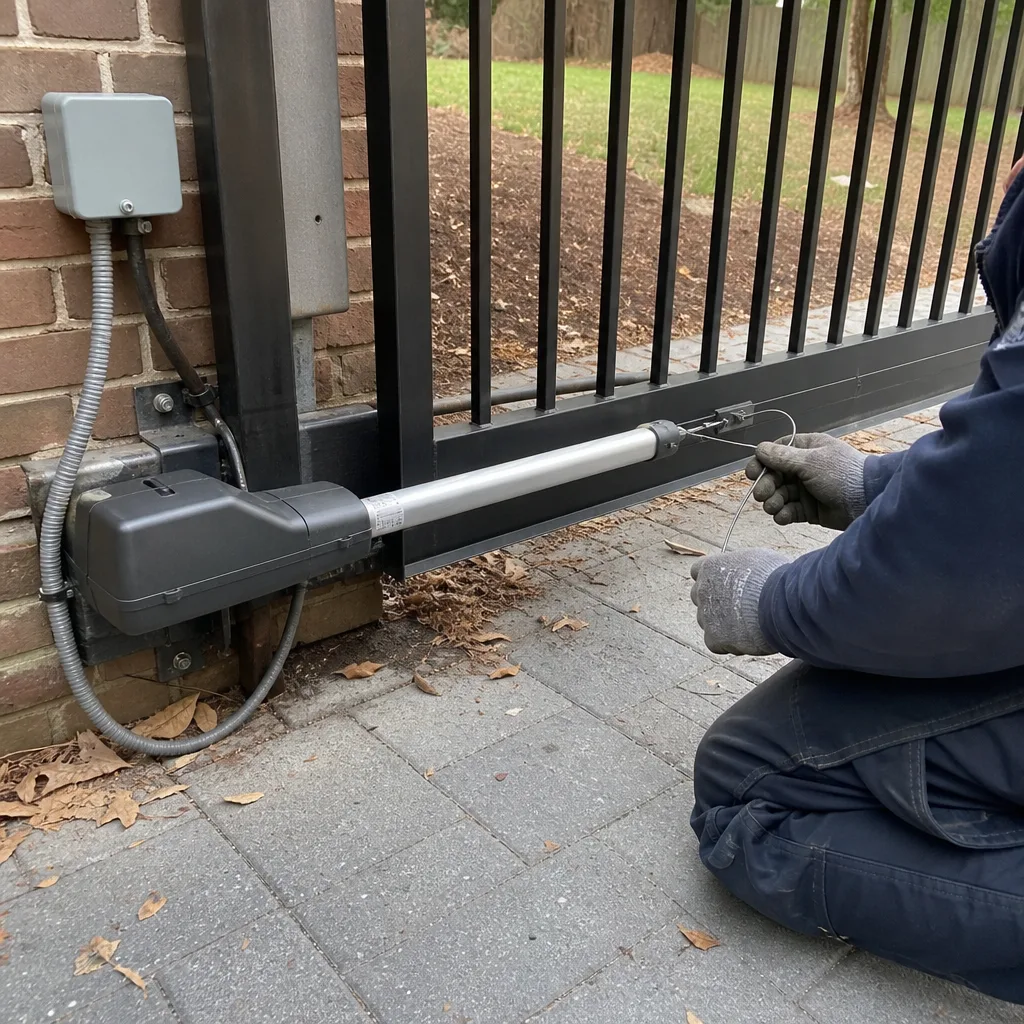
- Drain pneumatic operators. If your gate uses a pneumatic operator, winter prep means draining the system of accumulated moisture before the freeze. Trapped moisture in a pneumatic line can lock the operator or crack internal components once it freezes. This is a specialist task, not a homeowner one.
- Check post depth adequacy. Posts should sit in a footing poured to proper depth for the load. That’s not something you can eyeball, but you can watch for the early signs – a post that looks like it’s leaning, or a gate that has started to sag at the latch side.
- Clear the swing arc and slide path. Leaves, gravel and debris freeze onto surfaces and get driven into hinges, rollers and drive gear. Sweep and clear before hard frost.
- Test the safety sensors. Cold weather can make a marginal sensor intermittent. Test the reverse-on-obstruction function and the safety edges before winter so you’re not troubleshooting in the cold.
- Log the baseline. This is the least glamorous and most useful winter step. Before the freeze, note the post position, how the gate sits at the latch, and how the operator sounds on open and close. That baseline is what spring inspection compares against.
If your operator is a residential-grade system like Mighty Mule or a commercial unit like FAAC, winter prep differs in the details but not the principle: protect the electronics from moisture, clear the mechanical path, and record the starting condition. If you’re not sure where to start on your specific operator, our team works on your brand specifically and can do a winter prep visit as a one-time job.
Spring: The Post-Thaw Inspection Sequence
Spring is inspection season. What you’re looking for isn’t a broken gate – if it worked through winter, nothing is broken yet. You’re looking for evidence that the freeze-thaw moved something. That evidence is specific and, helpfully, measurable.
Follow this sequence, ideally on the same day each spring:
- Measure post movement. Pick a fixed reference point (a mark on the ground or a fence post) and measure the distance to the gate post at a consistent height. Record it. If that number changed from last year’s log, you’ve documented movement, and that’s the earliest possible warning of a footing problem.
- Check hinge alignment. Open the gate slowly by hand. A properly aligned hinge moves smoothly and doesn’t bind at any point in the travel. A hinge that sticks or squeaks has either collected grit or been strained by a post that shifted.
- Assess operator strain. Watch the operator do a full open and close cycle. Listen for the motor working harder than it did in the fall. Feel the gate – if it takes noticeably more manual effort to move than the log says it did last year, the operator has been compensating for something over winter.
- Inspect the control board for winter damage. Open the enclosure. Look for any sign of moisture intrusion: discoloration, corrosion on the board’s terminals, or corroded connectors.
- Confirm the latch and safety edges. A latch that’s shifted with the post can leave a gate that doesn’t fully close. That matters for both security and for the operator, which will fault if it can’t complete its close cycle.
- Record everything. Post measurement, hinge condition, operator behavior, control board condition. This becomes the baseline for summer.
In our experience, the spring sequence is where the operator’s winter work becomes visible. A post that shifted during the freeze doesn’t usually damage a LiftMaster residential operator overnight. It does it gradually, by forcing the motor to work against resistance it wasn’t sized for. That’s the kind of internal wear that presents as a control-board fault later. Catching it in spring is the difference between adjusting a hinge and replacing a board. If the spring sequence turns up something you can’t diagnose safely, an electric gate repair visit is the right next step.
Summer: Humidity, Corrosion, and Control Boards
Summer in Arlington is hard on steel and electronics for the same reason: humidity. High humidity means moisture is in the air all the time, and where there’s moisture there’s corrosion. The parts of a gate that suffer most are the ones that don’t get airflow: hinge pins, the threads on hinge bolts, and the terminal blocks inside a control enclosure. Those are the places corrosion starts, and it’s the sort of thing you don’t notice until a terminal won’t hold a connection or a hinge seizes.
What actually helps in Mid-Atlantic humidity is not just putting something on the metal. The prep is what matters. Rust that’s already forming under an existing finish has to come off first – a surface treatment over existing corrosion traps the corrosion. A proper treatment sequence for a steel hinge or latch mechanism is:
- Clean the surface back to sound metal and remove loose corrosion.
- Apply a treatment suited to the metal and the exposure; for exterior steel in this climate, that means a coating that holds up under repeated wet cycles, not just a light oil.
- Re-check at the change of season, not on a fixed calendar year. Corrosion in a humid summer moves faster than in a dry one.
The control board is different. You protect it by keeping moisture out, not by treating the board itself. That means checking the enclosure seal, the cable glands, and any breather or drain features on your operator’s housing. If your operator is a Linear or BFT unit, look at the housing condition honestly – a crack in a plastic housing or a gap at the lid seal is exactly how a summer thunderstorm ends up doing winter-grade damage to a control board.
Homeowners tend to notice electrical symptoms before mechanical ones in summer, because humidity-driven corrosion on a terminal creates intermittent faults before it creates a hard failure. If your gate stops and restarts, resets itself randomly, or faults only after a rain, the control board or a terminal junction is the likely culprit. That’s genuinely worth a specialist diagnosis, because the same symptoms come from a bad board, a bad terminal, a bad sensor or a wiring fault, and guessing is expensive.
Fall: Slide-Gate Tracks and Wet Leaves
Autumn is the season when Arlington’s slide gates are most likely to have a mechanical problem, and the reason is a perfect storm of conditions rather than anything dramatic. Wet leaves are heavy. They stick to a track and pack into the drive gear instead of blowing clear. And once they’re compacted, the operator is running against a mechanical load it can’t overcome, which either trips the obstruction safety or burns the motor trying.
Getting the track clean is one thing. Getting it clean without damaging the drive gear is another. The worst thing you can do is attack a packed track with a hose at full pressure and a hard scraper. The cleaning sequence that protects the system:
- Clear the loose material first. Sweep or rake the bulk of the leaves, twigs and debris out of the track and the gate’s path before using any water.
- Lift rather than scrape. Use a soft tool to lift debris out of the track. A metal scraper driven down against the track can gouge the running surface, and a gouged surface collects debris faster next time.
- Flush carefully. A controlled rinse to carry the fine debris off the track is fine. A high-pressure blast at the drive gear and operator housing is not.
- Dry the track. Wet leaves left in a track are a re-fouling risk. Clear the track and let it dry before the gate runs a full cycle.
- Check the drive gear and the gate’s travel. After cleaning, run a full open and close. The gate should run smoothly with no catch. Any catch is worth investigating before winter sets in.
Swing gates have their own fall issue: leaves and grit collect in hinges and along the gate’s travel. The same principle applies – clear it out, don’t force it through. If your slide gate is a heavy commercial system like a DoorKing, the tracking mechanism is more robust, but wet-leaf fouling still works the same way. If the drive gear has been jamming repeatedly through fall, that’s a mechanical repair, not a cleaning task, and it’s better handled before the first freeze. A one-time maintenance visit while the weather is still workable is the practical move.
How to Build a Seasonal Gate Log
A single observation tells you almost nothing. A gate that takes a little more effort to move than you remember could have been like that for years. A gate that moves with steadily increasing effort over several seasons is a different story, and that story is what the log is for. It’s the difference between knowing and guessing.
A useful seasonal gate log is one page, updated at the same point in each season:
- Post position – a measured distance from a fixed reference point, recorded at the same height each time.
- Gate effort – a qualitative note on how much manual effort it takes to move the gate (light, moderate, heavy). You don’t need a tool.
- Operator behavior – does it sound normal? Any faults, resets or inconsistent cycles? Note them, even if you can’t yet see a pattern.
- Hinge and latch condition – any play, squeak or shift from the previous entry.
- Control board and enclosure – seal condition and any visible moisture or corrosion.
- Safety devices – confirmed testing of obstruction reverse, safety edges and any access control (keypads, remote receivers).
The point is comparison. Year over year, the log catches progressive post movement – the kind that moves a fraction of an inch each winter – before the gate drags. Once the gate is dragging, the footing has already failed, and that’s a different job. A log entry that says “measured, no change from last spring” is the cheapest possible answer to a footing question, and it’s a genuine piece of evidence that a specialist can work from. When you do call us, bring the log. In our experience, a homeowner with a written record of three or four seasons gets the right diagnosis faster than a homeowner describing symptoms in the moment.
What Your Operator Brand Tells You About Seasonal Risk
Not every operator suffers the same seasonal weaknesses, and knowing your brand’s likely failure mode lets you focus your seasonal checks. Our team works with nine major gate operator brands, from residential-grade systems like Mighty Mule and Ghost Controls to commercial and industrial operators like FAAC, BFT, DoorKing and Viking, plus LiftMaster, Linear and Elite. That range matters because the right seasonal response depends on the system.
Broad patterns to know:
- Residential-grade operators (Mighty Mule, Ghost Controls) are typically lighter-duty and more sensitive to mechanical resistance from a post that’s moved. Their seasonal priority is spring inspection for post movement and winter pre-freeze clearance.
- LiftMaster and Linear residential systems are common on driveway gates; the control enclosure seal and terminal condition are the seasonal focus for these in Arlington’s humid summers.
- FAAC, BFT, DoorKing and Viking operators run on residential properties, multi-unit properties and commercial sites. Heavy-duty systems have different tolerances, but they also carry heavier gates, so winter freeze-thaw is more consequential if their footing or track has suffered.
- Elite operators cover a broad span from residential to light commercial; the seasonal check is dictated by the gate they’re driving, not the brand.
None of this replaces a proper on-site diagnosis, but it does help you know what to watch. If you don’t know what brand is on your gate, that’s worth finding out – it’s on the housing or the control board. Then, in the same spirit as the seasonal log, check the specific failings of that system each spring and fall. If your seasonal checks turn up a symptom you can’t explain, or a fault that keeps returning, we can tell you from the brand what’s likely going on. We don’t claim to be authorized or factory-trained on any brand; we’re independent and experienced with them, which means we troubleshoot what’s actually in front of us.
Common Mistakes to Avoid
- Attacking the slide track with a pressure washer. High-pressure water drives debris into the drive gear and can damage a control enclosure’s seal. Clear the leaves loose, flush gently, and dry the track.
- Treating rust on a hinge without cleaning it first. A coating over existing corrosion traps the corrosion against the metal. Remove the loose rust, then treat.
- Assuming a noisy operator is the operator’s fault. A post that’s shifted, a hinge that’s seized, or a slide track that’s fouled all make the operator sound rough when the operator itself is fine.
- Skipping the winter pre-freeze cycle. Draining a pneumatic operator before the freeze, checking the control enclosure seal, and clearing the travel path are all quick jobs that prevent expensive repairs in spring.
- Relying on memory instead of a log. Without a recorded post measurement or gate-effort note, you can’t tell whether a gate is steadily getting harder to move or was always like that.
- Trying to tighten or “fix” a shifted post by adjusting the hinge. Adjusting a hinge to compensate for post movement doesn’t solve the footing problem; it digs the failure in deeper.
- Ignoring a fault that resets itself. Intermittent faults are often early signs of moisture on a terminal or a failing board. Catching them in summer is cheaper than diagnosing in the middle of a winter failure.
When to Call a Professional
Some seasonal work is a checklist; some of it is genuinely hazardous. Any problem involving the operator’s wiring, a control board, the power run to the operator, the safety edges, or a heavy gate that’s come off its track is a job for a trained technician. Gate panels are heavy enough to cause real injury and slide gates carry their own track and track-rail dangers, so diagnosing them from a ladder isn’t worth the risk. Call for help if:
- The gate is dragging or binding on any part of its travel, even if the operator still opens it.
- The operator is faulting, resetting itself, or only working after a rain.
- A spring post measurement has changed compared with the log.
- Your safety sensors and edges don’t reliably test.
- The gate stops mid-travel, runs against the obstruction safety, or the track has visible damage.
- You’ve done your seasonal prep and a symptom has persisted.
Arlington Gate Service offers free estimates in Arlington – call (855) 349-3550. We answer 24/7, with fast dispatch from 7am to 7pm, Sunday through Friday. We’re a gate specialty, not a general contractor, and we handle both repair and full installation, so a system replacement is something we can plan and quote as a single job. Our technicians have up to 10 years of experience, and the price is quoted and agreed before any work starts.
Frequently Asked Questions
The spring post-thaw inspection, because it’s the earliest chance to catch freeze-thaw movement before the operator is damaged by compensating for it. Measure your post position from a fixed reference point and record it. A change year over year is your warning sign. If the measurement has moved, call us for an inspection rather than adjusting anything yourself.
Inspect the control enclosure seal and terminals once in spring after the thaw and once in later summer after the humid stretch. Arlington’s humid summers are hard on control board terminals, and moisture intrusion is easier to catch early than to repair later. If you see corrosion or the operator faults after rain, get it diagnosed before winter.
Wet leaves pack into the track and drive gear and don’t blow clear the way dry leaves do. The operator then works against a mechanical load it can’t overcome. Clear the track before it packs, flush carefully rather than at high pressure, and dry the track afterward. If the drive gear has been jamming repeatedly, the fix is mechanical, not just cleaning.
Do the safe mechanical tasks – clearing debris, measuring post movement, checking hinges for play, testing the obstruction safety. Leave anything electrical, anything involving the control board or operator wiring, and anything involving a heavy or off-track gate to a technician. Heavy gate panels and gate operator power should be handled by someone qualified to work on them.
A winter prep visit focuses on protecting the gate through the freeze cycle: checking and protecting the control enclosure from moisture, draining a pneumatic operator if present, assessing whether the post footing shows signs of movement, clearing the travel path and checking the safety edges. It’s a one-time visit priced per job after we look at your system.
We work on LiftMaster, FAAC, BFT, Linear, Viking, Ghost Controls, DoorKing, Elite and Mighty Mule – across residential and commercial systems. Our team is independent and experienced with these brands, so we diagnose the actual operator on your gate rather than assuming. If you’re not sure what brand you have, call (855) 349-3550 and have the housing handy. Estimates are free.
See the difference
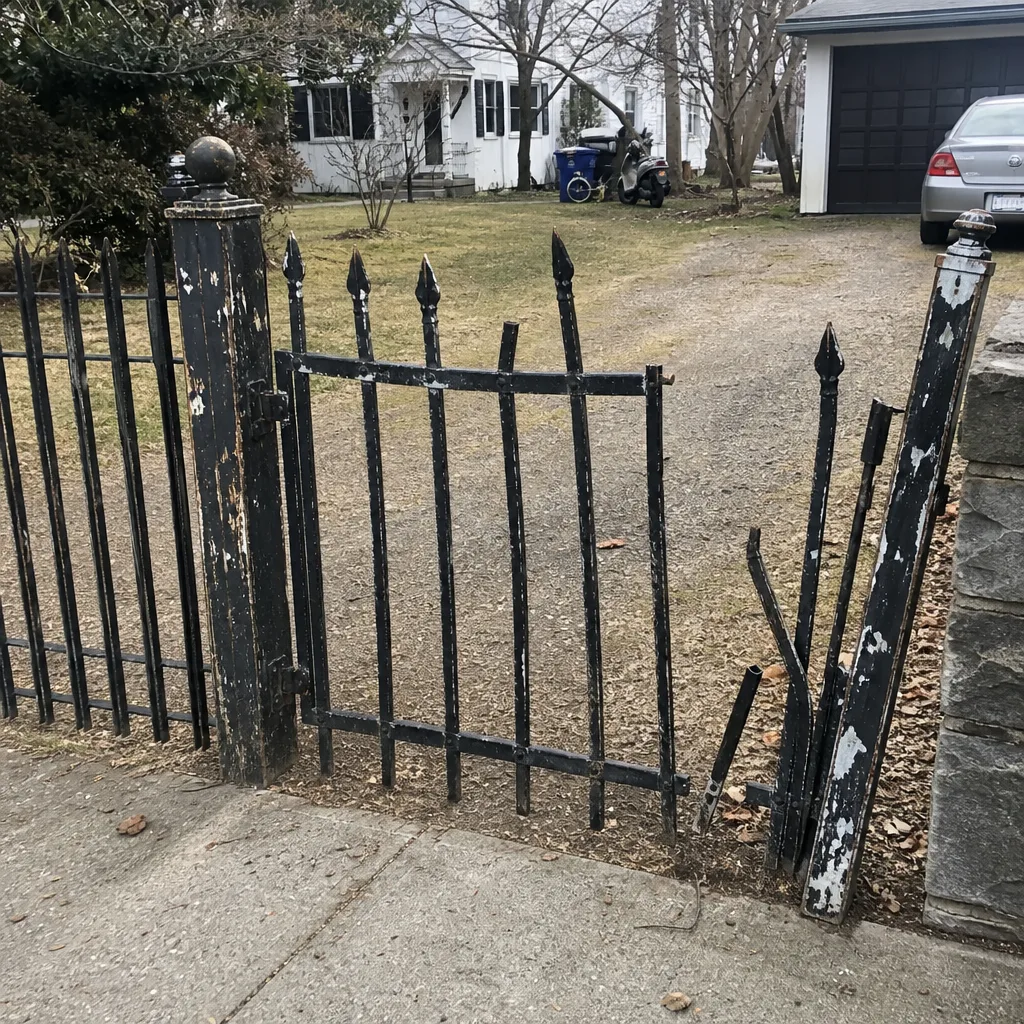 Before
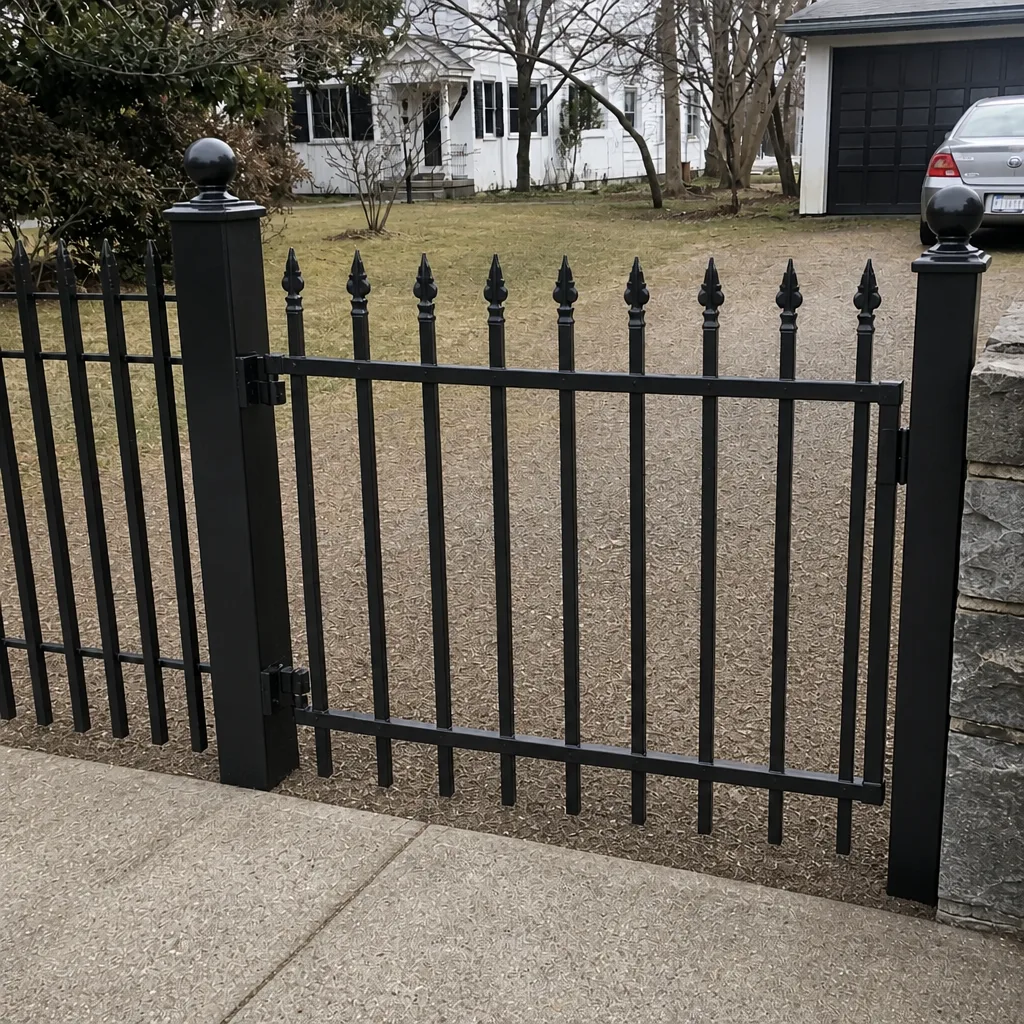 After
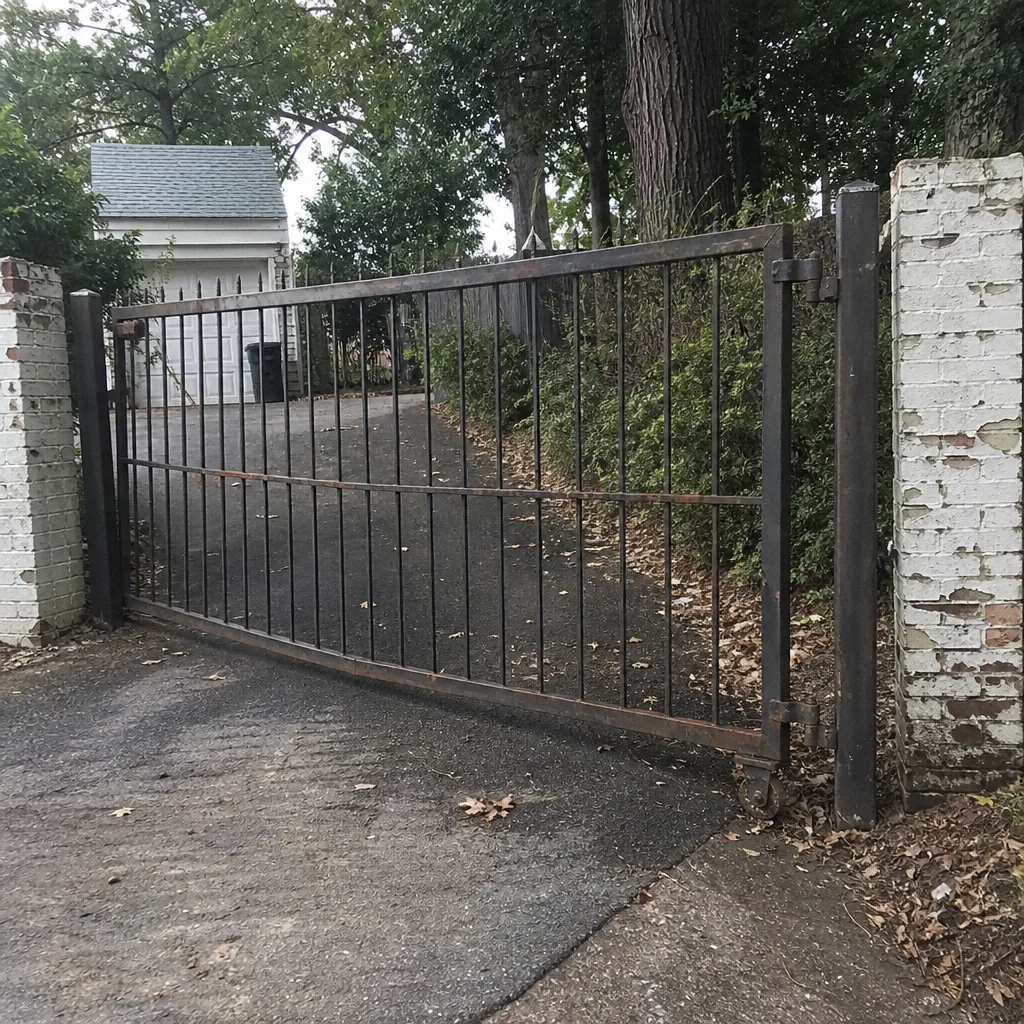 Before
 After
 Before
 After
The Bottom Line
Seasonal gate care in Arlington is about matching your response to the season’s specific failure mode, not running the same checklist all year. Winter freeze-thaw moves posts and stresses operators, spring is when you find out how much, summer humidity corrodes steel and control board terminals, and fall leaf debris fouls slide tracks. The single habit that ties it all together is a written seasonal log: post measurement, gate effort, operator behavior, hinge and enclosure condition, recorded at the same point each season. That record turns a slow drift into a visible trend. For any of it that’s electrical, heavy-panel, or already failing, we’re here for gate repair and for the Arlington work around it. Written by the team at Arlington Gate Service.
Contact
If your seasonal checks turn up something, or you want a specialist to look at your gate before the next season of weather does, call (855) 349-3550 for a free estimate. We answer 24/7, with fast dispatch from 7am to 7pm, Sunday through Friday. Our technicians have up to 10 years of experience on systems from residential driveways to multi-unit and commercial properties, and we’ll quote the price in writing before any work starts.
Written by the team at Arlington Gate Service.