
Last updated November 15, 2026
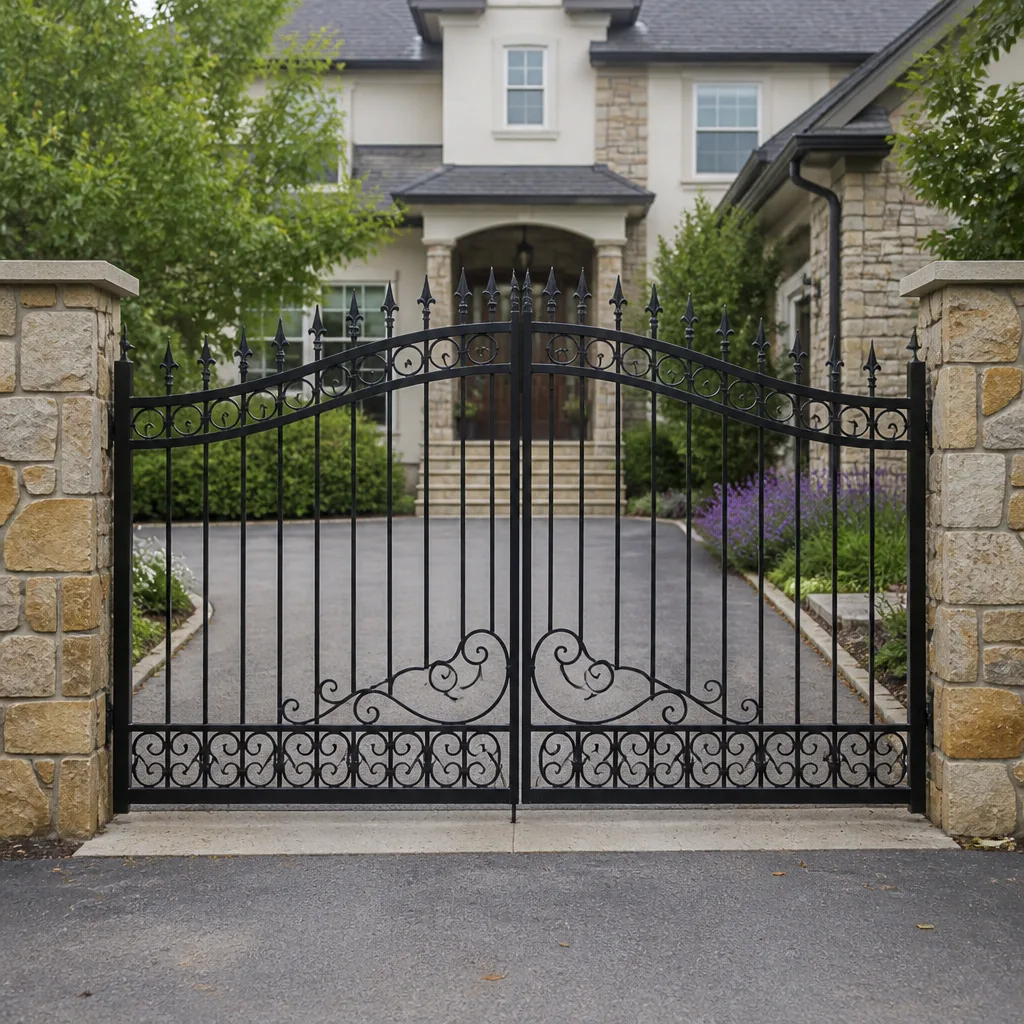 Wrought iron
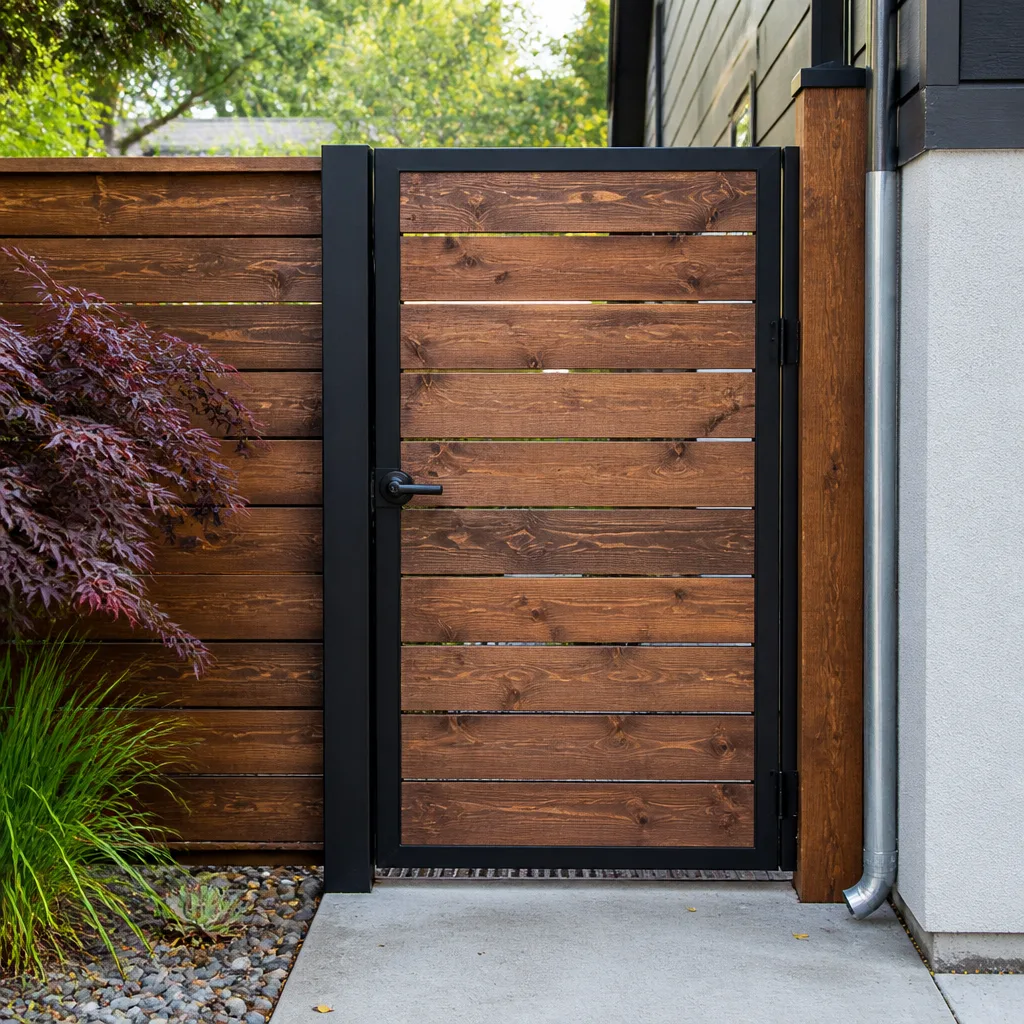 Wood & steel frame
 Farm & ranch
 Sliding driveway gates
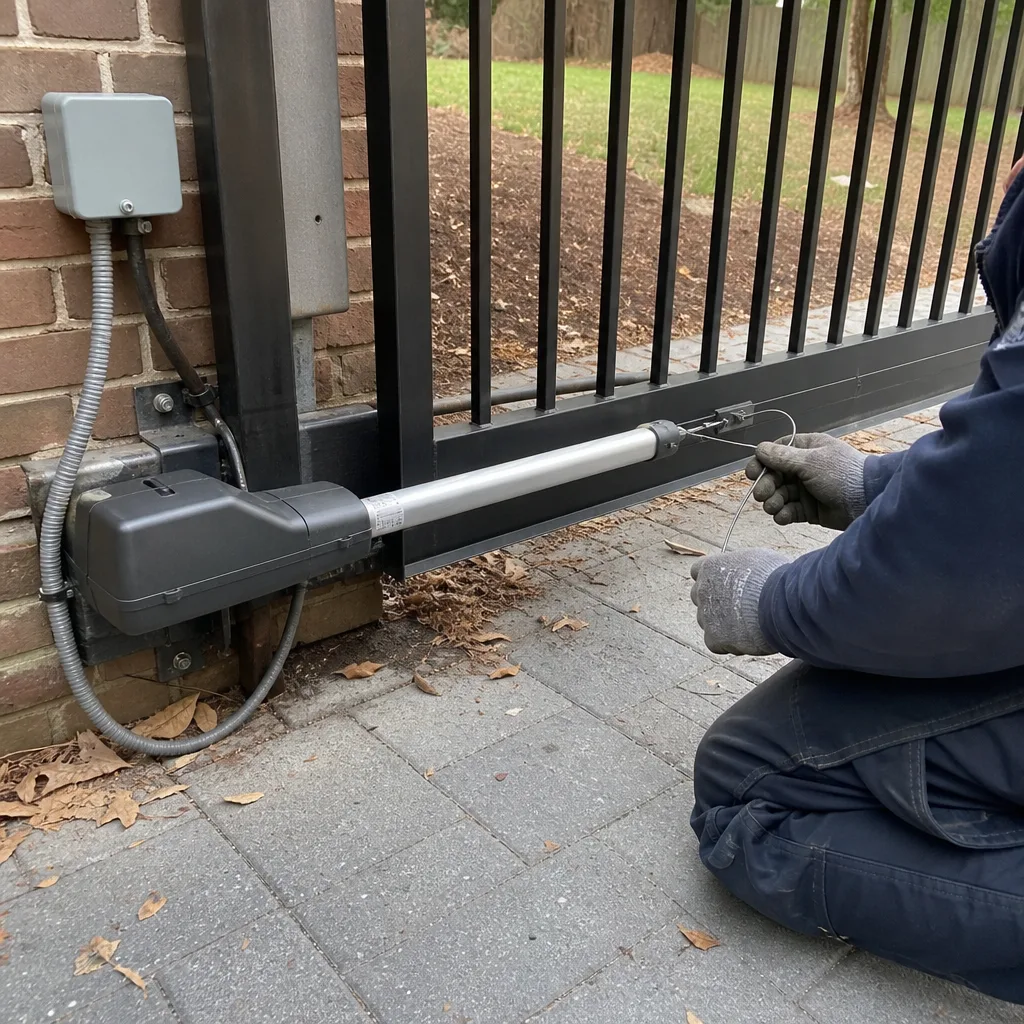
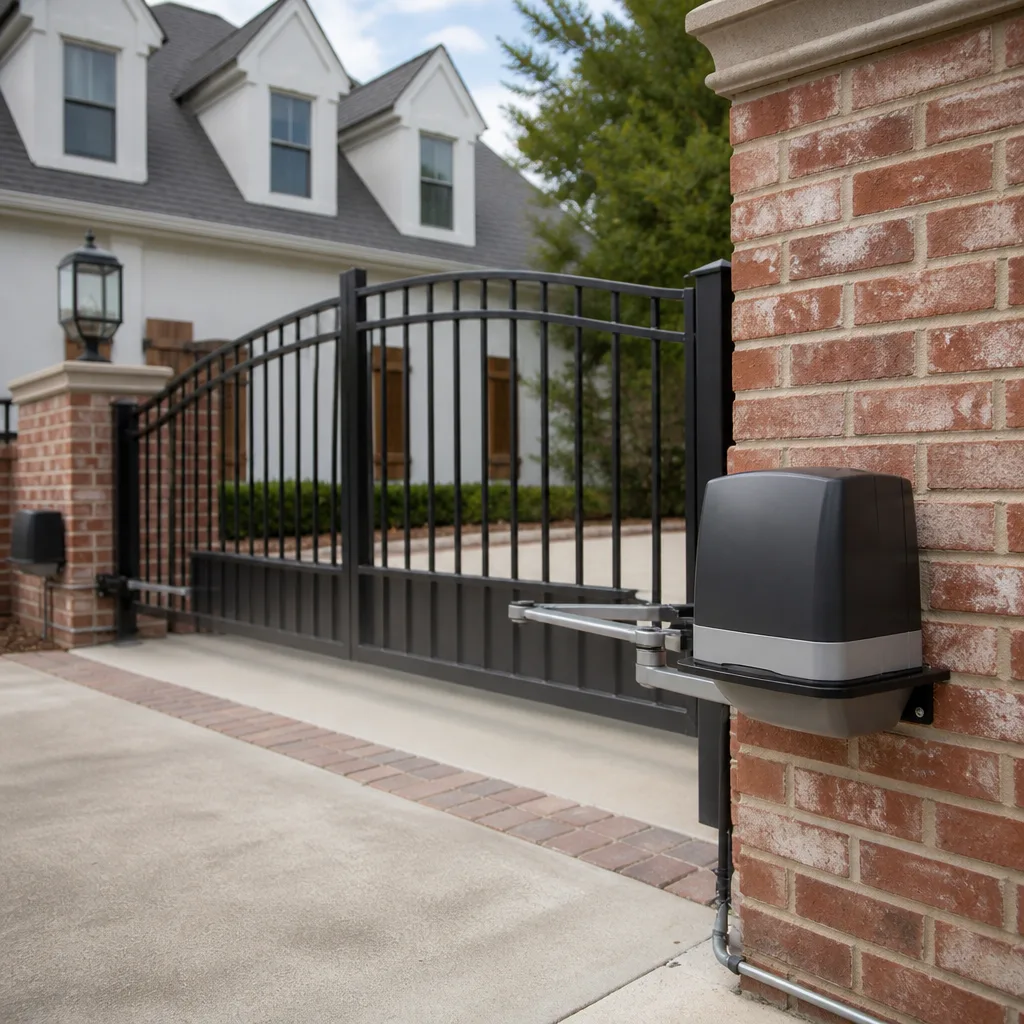 LiftMaster operators
Free on-site gate assessment - hinges, posts, and your LiftMaster or Nice gate operator checked before anything is quoted
The assessment is free and the quote is the invoice.
Get your free estimateDIY vs Professional Gate Repair: The Arlington Homeowner’s Decision Guide
Adjusting a manual gate hinge is not the same risk category as resetting an electric gate operator after a power surge. One goes wrong and your gate sags. The other goes wrong and your gate traps a vehicle or fails a safety reversal test. Most DIY guides flatten those two jobs into a single “fix your gate” article, which is where homeowners in Arlington get into trouble. This guide draws the line precisely: what you can safely handle, what voids a warranty, and what creates an entrapment hazard. By the end you’ll know exactly where to stop.
Quick Answer
Safe DIY gate work is limited to maintenance: lubricating hinges and rollers, tightening loose bolts, clearing debris from the track, and reprogramming a remote. Anything involving the operator motor, control board, safety sensors, loop detectors, or the power feed is professional work, not because homeowners lack skill but because a mistake there creates entrapment and liability problems. For an electric gate in Arlington, the failure mode usually decides the answer, not the difficulty.
Styles & brands we work with
- Wrought iron
- Wood & steel frame
- Farm & ranch
- Sliding driveway gates
- LiftMaster operators
Table of Contents
- Sorting Gate Repairs by Risk and Skill Level
- What a Careful Homeowner Can Safely Do
- Why Electric Gate Work Shouldn’t Be DIY
- The Warranty Voiding Risk Most Guides Skip
- Tools and Diagnostic Logic for Safe DIY Maintenance
- How to Split the Work With a Professional
- Common Mistakes to Avoid
- When to Call a Professional
Sorting Gate Repairs by Risk and Skill Level
The useful question isn’t “can I do this myself?” It’s “what happens if I get it wrong?” A gate repair falls into one of three buckets, and knowing which bucket you’re in takes about thirty seconds of honest assessment. In our experience, the homeowners who get frustrated fastest are the ones who spent an afternoon on a job that belonged in the third bucket from the start.
Bucket 1: Homeowner-safe maintenance
- Lubricating hinge pivots, rollers, and the track on a slide gate
- Tightening bolts on hinges, brackets, and post caps that have worked loose
- Clearing leaves, gravel, and debris from the slide track or swing arc
- Reprogramming a remote or keypad code on most residential operators
- Wiping down and visually inspecting the gate after a storm
Bucket 2: Gray zone – proceed only if you’re certain
- Adjusting the physical travel limits on a swing gate arm
- Replacing a battery in a solar-charged residential operator
- Resetting an operator that has tripped after a power interruption
- Tightening a sagging gate on a manual system with a turnbuckle or brace
These jobs are mechanically simple but easy to get half-right. A travel limit set too far and the gate slams or reverses mid-arc. A solar battery swapped without the correct replacement and the operator behaves unpredictably. If you’re second-guessing yourself here, that’s your answer.
Bucket 3: Professional-only
- Any work inside the operator housing, control board, or motor
- Safety sensor, photo-eye, and entrapment protection adjustment
- Loop detector installation, tuning, or replacement
- Wiring, power feed, or anything that touches the electrical supply
- Operator replacement or a full gate system change
- Repairing a slide gate that has come off its track or a heavy panel that has shifted on its posts
That third bucket is where gate repair stops being a weekend project. If your gate is automated, this is also the bucket where the wrong adjustment creates a safety problem, not a cosmetic one.
What a Careful Homeowner Can Safely Do
Plenty, and we’d rather you did it. Routine maintenance is the single best way to reduce service calls, and it’s work any attentive homeowner can handle on a manual or automated gate. The key is staying in maintenance territory and not drifting into adjustment or repair.
Here’s a sensible routine for a gate in Arlington, where wet winters, freeze-thaw cycles, and humid summers all work on metal hardware:
- Walk the full arc or track once a month. Open and close the gate by hand if it’s manual, or watch a full cycle on an automated system. Look for hesitation, unusual noise, or a gate that binds partway.
- Lubricate hinges and rollers. A light application of a gate-appropriate lubricant on pivots and rollers keeps a manual gate swinging freely and reduces strain on an operator.
- Tighten what’s loose. Bolts on hinges, brackets, and post caps back out over time. A socket set and five minutes is all this takes.
- Clear the track. On a slide gate, debris in the track or under the gate is one of the most common causes of a gate that drags or stops short.
- Test the remote or keypad. If the remote stops working, replace the battery and reprogram before assuming the operator has failed.
- Look for rust and paint failure. Spotting corrosion early and touching it up keeps a gate structurally sound longer. If rust is eating into a weld or a hinge point, that’s beyond cosmetic.
None of this requires specialty tools or a call. Done consistently, it prevents the majority of the simple failures we get called out for. It does not touch the parts of the system that carry real risk.
Why Electric Gate Work Shouldn’t Be DIY
Electric and automated gate work is a different discipline from manual gate maintenance, and it’s the part of the trade where a mistake stops being a sagging gate and starts being an entrapment hazard. This is the section most DIY guides skip, and it’s the one that matters most in Arlington, where automated driveway gates are common on both single-family lots and multi-unit properties.
An automated gate operator has three systems that homeowners should never adjust: the motor and control board, the safety reversal and entrapment protection sensors, and the power feed. Each carries a specific reason.
- The control board. Modern operators from LiftMaster, FAAC, BFT, and others use control boards that manage timing, force limits, and sensor input together. A wrong jumper, a mis-seated connector, or a mis-set force limit and the operator can behave in ways that are hard to predict and hard to diagnose later.
- Safety reversal and entrapment protection. Photo-eyes, safety edges, and loop detectors exist because a moving gate can crush a vehicle or a person. They are set to a specific logic, and adjusting them without the right test equipment and the right knowledge can leave a gate that passes a casual test but fails under load.
- The power feed and wiring. This is electrical work on a piece of outdoor equipment exposed to weather. Beyond the shock risk, an improperly wired operator can fail in a way that damages the control board or creates an unsafe condition when the gate is in motion.
There’s also the liability question. If an automated gate injures someone or damages a vehicle and the system was adjusted by the property owner outside the manufacturer’s spec, the property owner carries that problem. Most homeowners in Arlington don’t want that exposure on a system that operates every day.
For electric gate repair, the correct move is to have a specialist diagnose the actual system rather than guess. We handle electric gate repair as a core service, and the reason we can diagnose accurately is that we work on the specific operator brand in front of us, from residential-grade units like Mighty Mule and Ghost Controls to commercial operators like FAAC and DoorKing. A generalist shop applies one approach to every brand. A gate specialist reads the board.
The Warranty Voiding Risk Most DIY Guides Skip
Gate operator warranties are narrower than most homeowners assume. Manufacturers cover defects in materials and workmanship, and most tie that coverage to installation and service performed to their spec. Owner-performed repairs beyond basic programming and maintenance routinely fall outside that coverage, and some manufacturers will decline a claim if the failure traces back to an unqualified repair.
The pattern varies by brand, but the shape is consistent across the major operators:
- LiftMaster residential and commercial operators include warranty terms that presume proper installation and service by a qualified provider. Repairing the board or reversing system yourself is generally outside those terms.
- FAAC commercial and residential operators follow the same logic. Their warranty language expects service to their specification, and aftermarket board swaps or field modifications are the kind of thing that draws a second look during a claim.
- Mighty Mule residential operators are more forgiving on the maintenance side, and basic programming is squarely within the homeowner’s manual. Board-level repair or force-limit changes are a different story.
- BFT commercial operators sit in the same category as FAAC: service is expected to follow the manufacturer’s procedure, and a repair that doesn’t can complicate a warranty claim.
The practical takeaway: if your operator is still under warranty, any repair beyond lubrication, debris clearing, and remote programming is worth a call before you open the housing. A board swap that seemed simple and turned out to be the wrong board is the kind of repair that costs more to unwind than it saved. In our experience, homeowners in Arlington are more likely to void a warranty by adjusting safety settings than by anything else, because those settings look like a button any capable person could press.
Tools and Diagnostic Logic for Safe DIY Maintenance
The right tool list for safe DIY gate maintenance is short, and the diagnostic logic behind using each tool is what separates a routine maintenance session from a repair that goes sideways.
What you actually need
- A socket set and wrench for hinge and bracket bolts. Most gate hardware is standard bolt sizes, and having the right size avoids rounding heads.
- A gate-appropriate lubricant for hinge pivots and rollers. Not WD-40 as a long-term lubricant, which evaporates and attracts grime. A proper lubricant keeps pivots moving.
- A stiff brush and a small hand broom for clearing debris from slide tracks and swing arcs.
- A flashlight for inspecting the underside of the gate, the posts, and the track.
- The owner’s manual for your operator if you have an automated gate. It tells you which buttons are programming and which are service-level, and that distinction matters for your warranty.
- A spirit level only if you’re checking whether a post has shifted. Leave the actual leveling to a professional.
The diagnostic logic
When something feels wrong, the mental checklist should go from simple to complex, and stop well before the complex end.
- Is the gate physically obstructed? Debris, vegetation, or a dropped object in the track or arc.
- Is the hardware loose or dry? A wobbly hinge or a dry pivot will cause a binding gate.
- Is the operator getting power and responding to input? Test a remote and a keypad before assuming the motor has failed.
- Does the gate pass a manual safety check on an automated system? Stand clear and confirm the gate reverses when it meets resistance. If it doesn’t, stop and call.
- Is the behavior reproducible? A gate that occasionally starts on its own or reverses mid-arc is a diagnostic problem, not a maintenance task.
That last step is the line. Anything that repeats unpredictably, involves the safety system, or traces to the operator itself is where homeowners should stop and a professional should start. If you’re in Arlington and your gate is showing one of those symptoms, this is the moment to get it diagnosed right the first time rather than guess at the housing.
How to Split the Work With a Professional
The most useful thing this guide can teach you is how to structure a call so you get maximum value out of a professional visit while keeping routine maintenance in your own hands. Homeowners who do this well spend less on service calls and get faster answers, because they hand the technician a clear picture of what they’ve already ruled out.
Here’s how a conversation with a gate specialist should go:
- Identify your system first. Note the operator brand and, if you can see it, the model number. This is where a specialist is worth calling: we work on LiftMaster, FAAC, BFT, Linear, Viking, Ghost Controls, DoorKing, Elite, and Mighty Mule, so we recognize the system on arrival rather than applying one approach to every brand.
- Describe the failure mode in plain terms. “The gate reverses halfway through closing” is more useful than “it doesn’t work right.” Note when it started, what changed if anything, and whether it’s consistent.
- List what you’ve already tried. If you’ve cleared the track, replaced the remote battery, and tightened a hinge, say so. That saves diagnostic time and keeps the visit focused on the actual issue.
- Ask what you should be maintaining between visits. A specialist will tell you exactly which routine tasks are safe for you and which should stay on their side.
- Get a written estimate before any work starts. The price should be quoted and agreed before the technician begins, and the written estimate sets the final price.
- Keep a simple record. Note what was repaired and when. A history makes the next diagnostic faster and helps you decide when a system is due for replacement rather than another repair.
That last point connects to the bigger decision. Some gates reach the point where repair costs add up faster than a replacement would. If your system is aging and the failures are stacking, a full gate installation may make more sense than another repair, and having it handled by the same specialist saves you from sourcing a second vendor. Our team at Arlington Gate Service covers repair, electric repair, and installation, so the conversation can go in whichever direction your gate actually needs.
See the difference
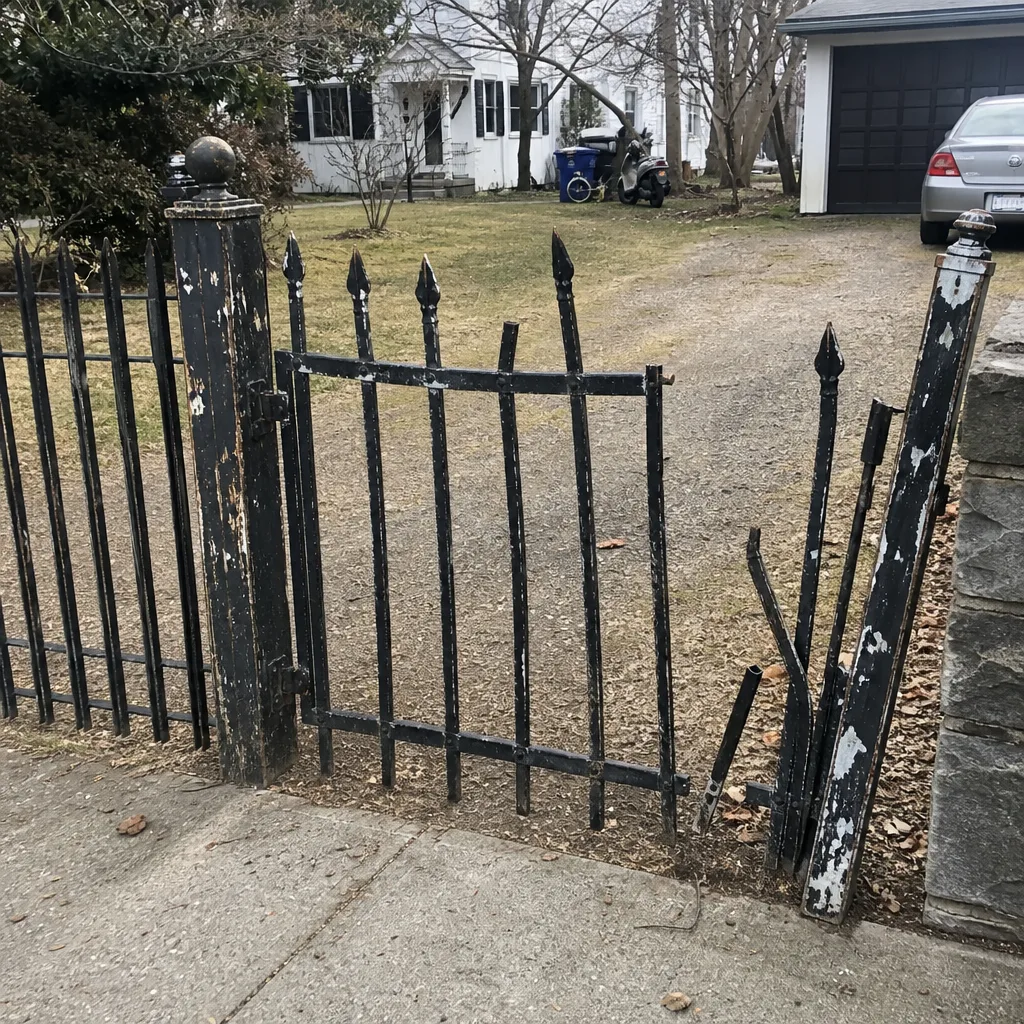 Before
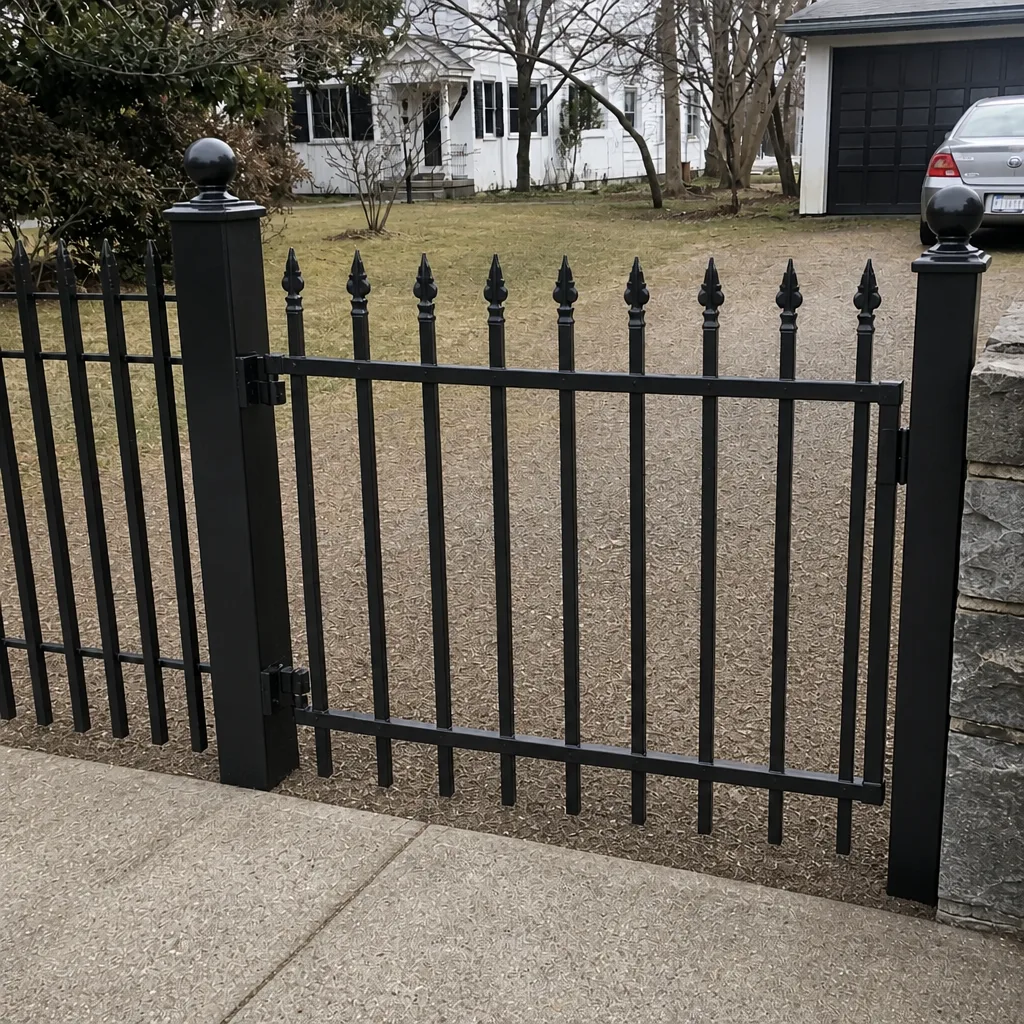 After
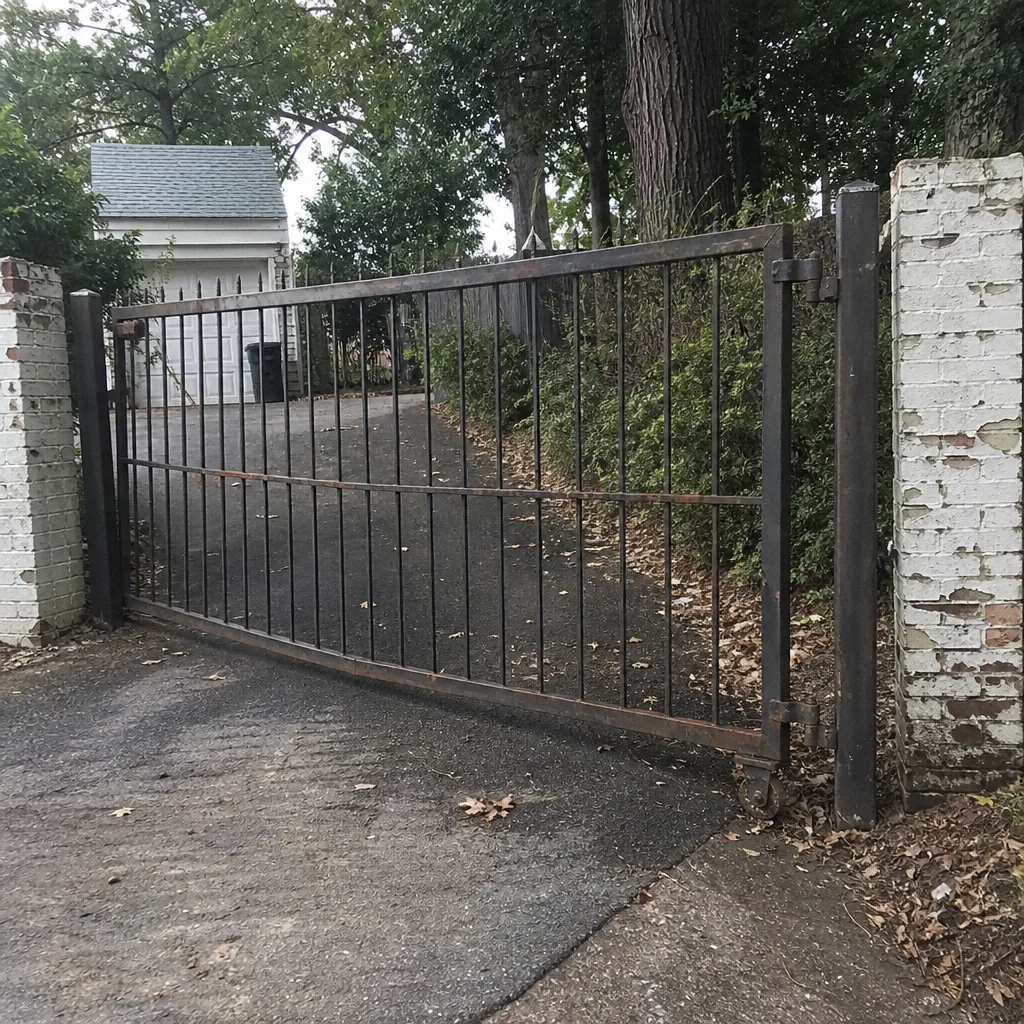 Before
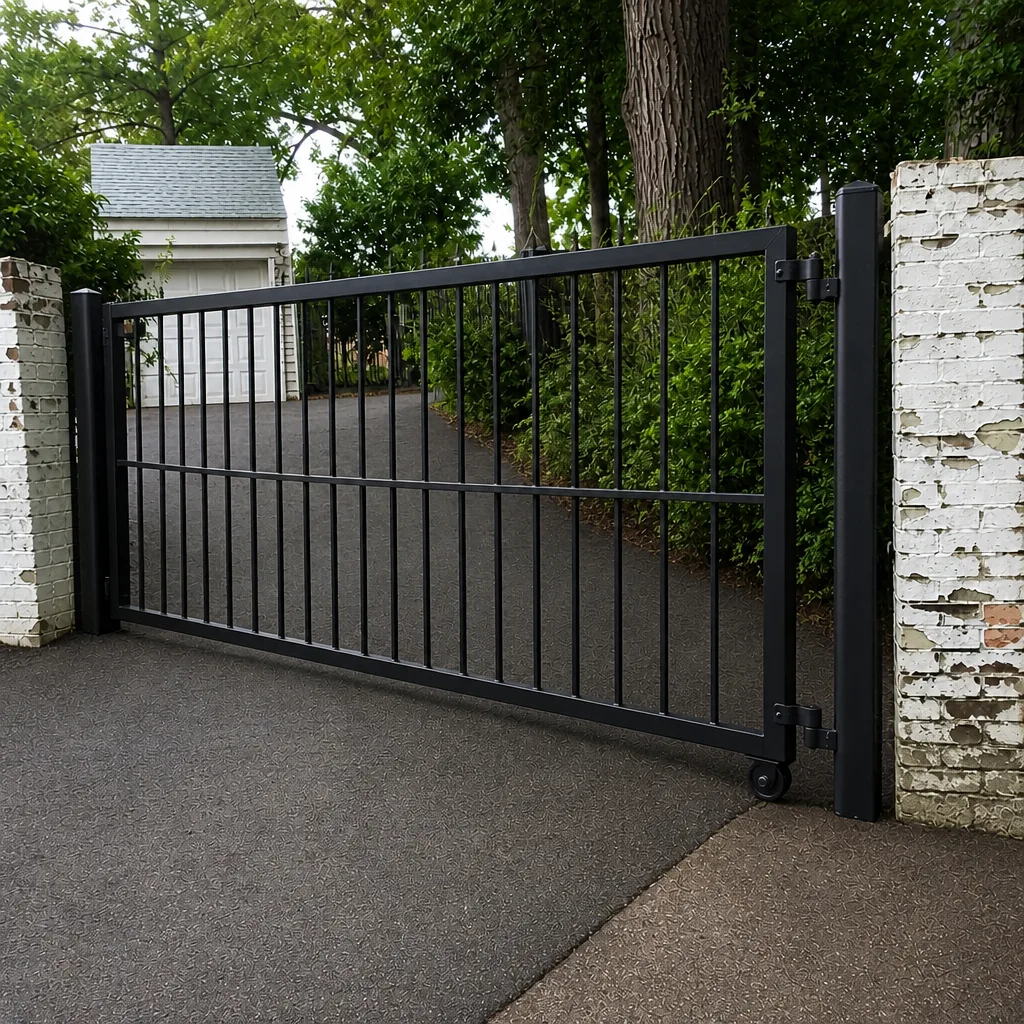 After
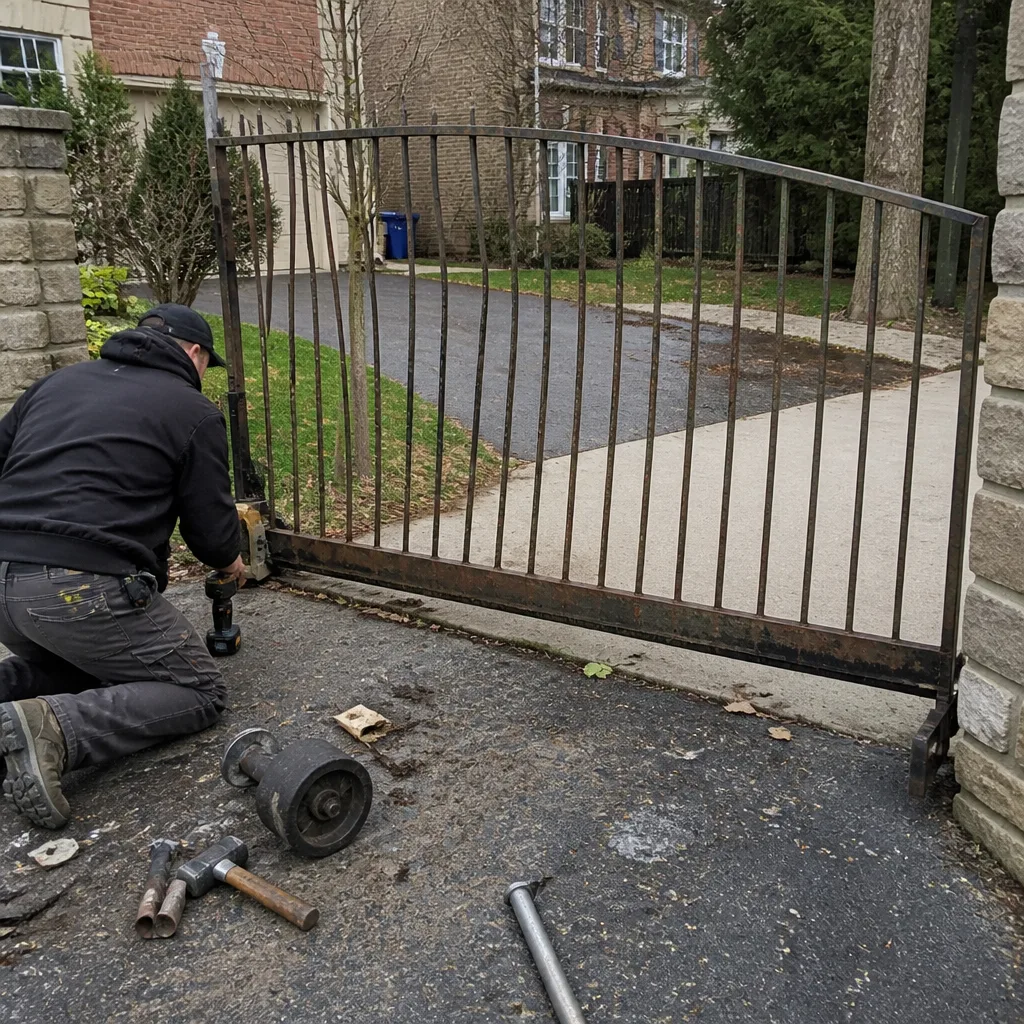 Before
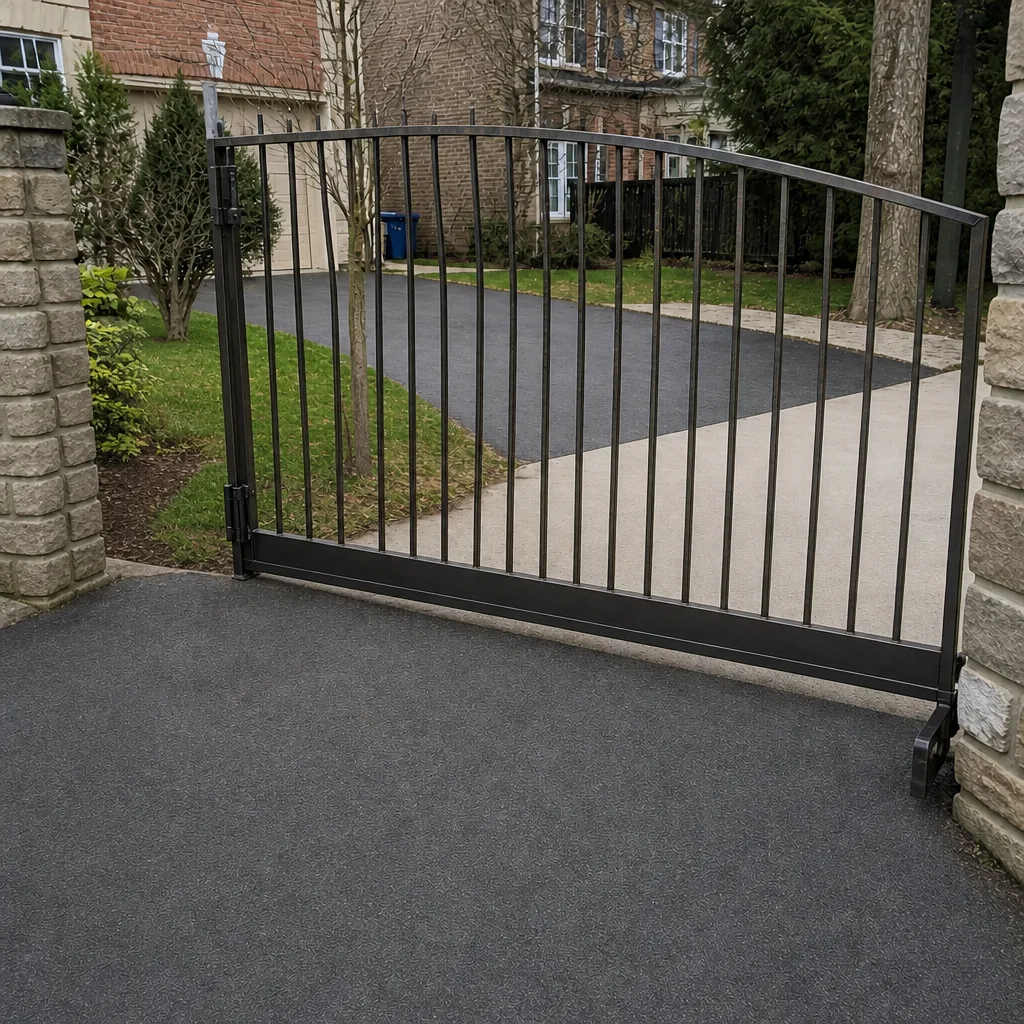 After
Common Mistakes to Avoid
- Treating a manual gate maintenance task and an automated operator adjustment as the same thing. They’re different risk categories. Adjusting a hinge is safe; touching the force limit or reversing logic on an operator is not.
- Opening the operator housing without noting the warranty status. LiftMaster, FAAC, BFT, and most other brands tie coverage to service performed to spec. A repair inside the housing before you check warranty can cost you more than the repair itself.
- Adjusting safety sensors to “fix” a gate that keeps reversing. In our experience, this is the most common and most dangerous DIY mistake in Arlington. Reversal is usually a sensor, track, or obstruction issue, not a signal to disable the safety feature.
- Assuming a gate that stops short is an operator problem. Debris in the slide track, a sagging panel, or a binding hinge will all cause the operator to cut out. The fix is mechanical, not electrical, and a specialist will spot it in minutes.
- Ignoring rust at a weld or hinge point. Cosmetic rust is fine to touch up. Rust eating into structural hardware means the gate is weakening, and no amount of maintenance will reverse it.
- Calling a general handyman for an electric gate. Automated operators from FAAC, DoorKing, Ghost Controls, and others need brand-specific knowledge. A generalist will subcontract the electrical work or guess, and guessing costs more than a specialist visit.
- Skipping maintenance because the gate “still works.” Routine lubrication and bolt checks prevent the majority of small failures from becoming large ones, and they take less time per month than a single service call.
When to Call a Professional
Call us when the gate involves the operator, the safety system, the electrical feed, or the physical structure of the panel. Specifically: any automated gate that reverses unexpectedly, runs on its own, or shows a fault code; any slide gate that has come off its track; any heavy panel that has shifted on its posts; any operator that won’t power up or has tripped after a storm; and any electrical work at all. Also call before you open the operator housing if the system is under warranty. Call (855) 349-3550 for a free estimate in Arlington. Arlington Gate Service offers free estimates, and the price is quoted and agreed before any work begins. We answer 24/7. Fast dispatch from 7am to 7pm, Sunday through Friday.
Frequently Asked Questions
No, and we’d strongly advise against it. Replacing an operator involves the electrical supply, mounting and alignment of the arm or slide mechanism, and full setup of the safety reversal system, all of which have to be correct for the gate to operate safely. A replacement done outside the manufacturer’s spec can void the new warranty before it’s even useful. Call (855) 349-3550 for a free estimate.
It can, yes. Most major operator brands, including LiftMaster, FAAC, and BFT, tie coverage to service performed to their specification, and entrapment protection adjustment is squarely in that category. If your gate is reversing unexpectedly, the right move is to have a specialist diagnose the actual cause. Call (855) 349-3550 to schedule a visit.
Lubricating hinges and rollers, tightening loose bolts, clearing debris from the track, and reprogramming a remote are all safe homeowner tasks on manual and automated gates. Anything inside the operator housing or involving the safety system is not. If you’re in Arlington and unsure which category a task falls into, call and ask before you start.
The price is set per job by the written estimate, and the estimate is free. We won’t quote a number before we’ve looked at the system, because the cost depends on the operator brand, the failure mode, and the parts involved. Call (855) 349-3550 for an exact quote, and the price is agreed before any work starts.
Usually not. Reversal is typically a safety sensor, loop detector, binding hardware, or control board issue, and all of those are in the professional bucket. Adjusting the sensor or force limit to stop the reversal is exactly the mistake that creates an entrapment hazard. Call (855) 349-3550 and we’ll diagnose the actual cause.
Same-day service is available for gate repair calls, and we answer the phone 24/7. A call outside dispatch hours is booked into the next opening, Sunday through Friday, 7am to 7pm. Call (855) 349-3550 for a free estimate and the soonest available visit.
The Bottom Line
The DIY-versus-professional question for gate repair comes down to what happens if the repair goes wrong. Maintenance is yours: lubrication, bolt tightening, debris clearing, and remote programming are safe, useful, and reduce calls. Anything involving the operator, control board, safety sensors, loop detectors, or power feed belongs to a specialist, and so does any work that could void a manufacturer warranty. A gate specialist who recognizes the brand on arrival gets the diagnosis right the first time. Call (855) 349-3550 for a free estimate and an honest answer about which side of the line your repair is on. We answer 24/7. Fast dispatch from 7am to 7pm, Sunday through Friday.
Written by the team at Arlington Gate Service.