
Last updated November 15, 2026
 Wrought iron
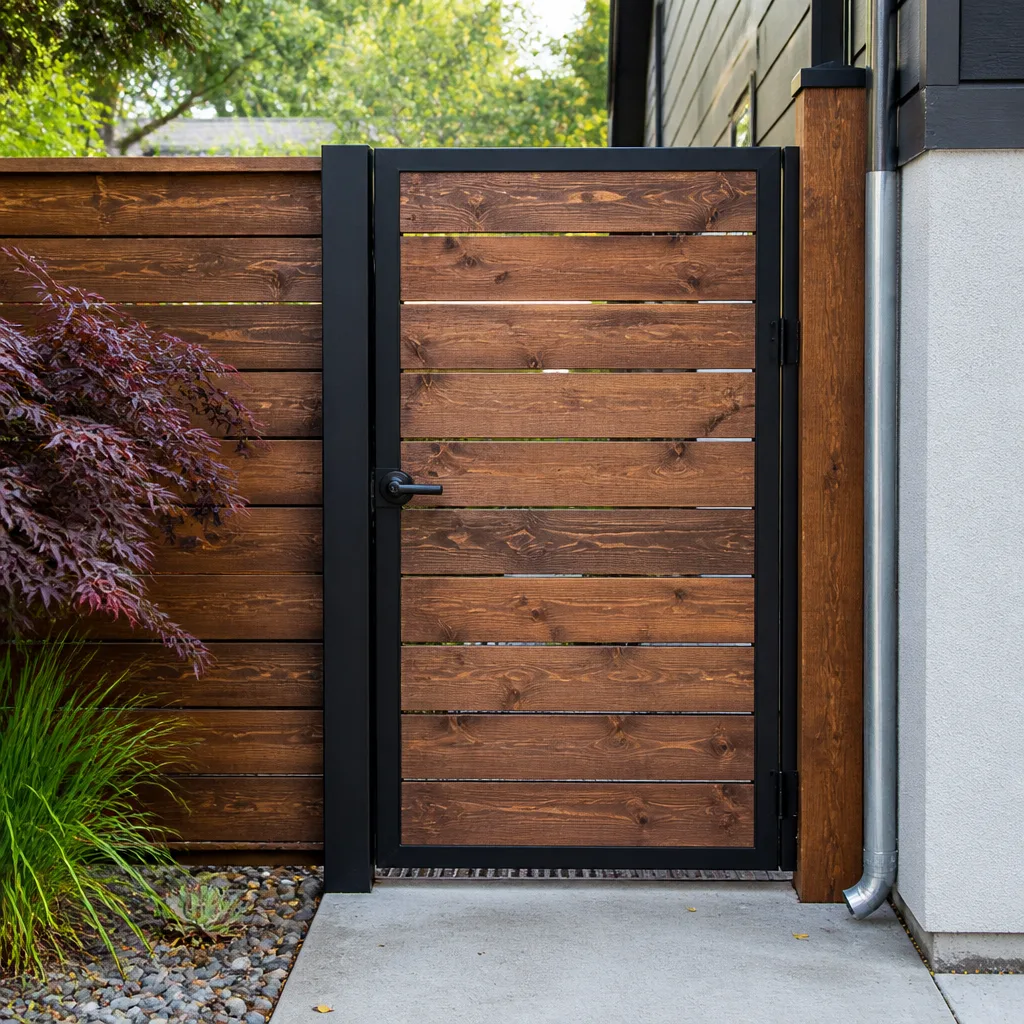 Wood & steel frame
 Farm & ranch
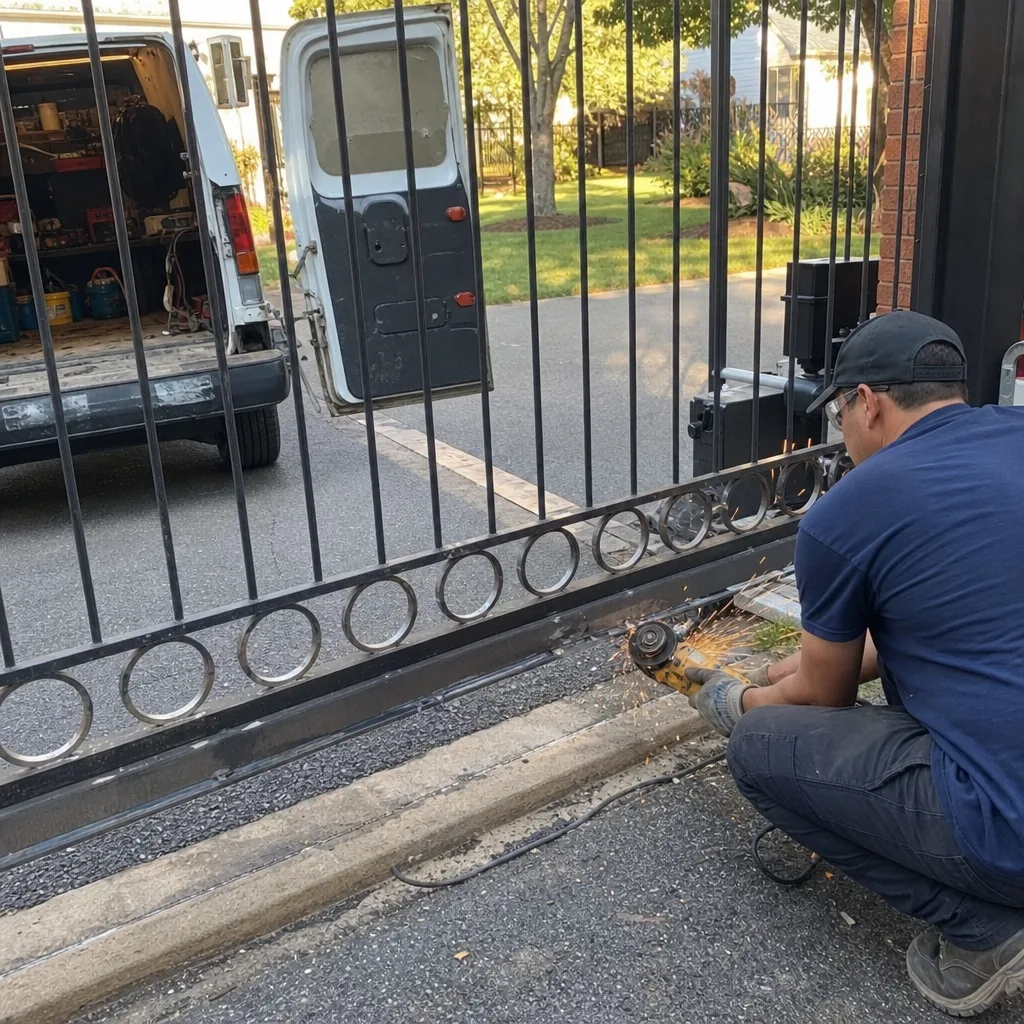
 Sliding driveway gates
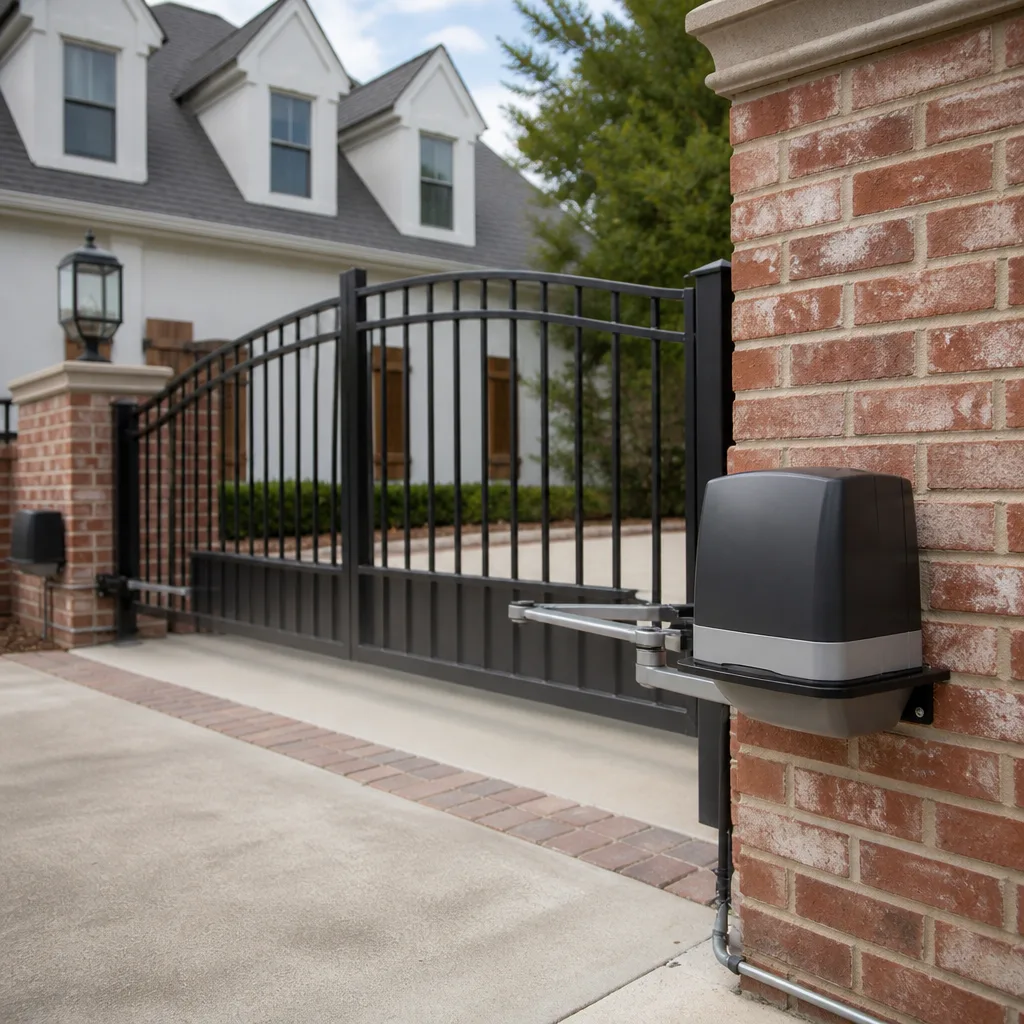 LiftMaster operators
Free on-site gate assessment - hinges, posts, and your LiftMaster or Nice gate operator checked before anything is quoted
The assessment is free and the quote is the invoice.
Get your free estimateGate Repair Maintenance Schedule: What to Do and When
A gate operator’s duty cycle is the number most maintenance guides ignore, and it’s the one that matters most. A residential driveway gate that opens and closes a dozen times a day will run roughly 4,400 cycles a year, while a busy HOA entry in Arlington can clear that same total in a single month of heavy traffic. That gap is why a fixed calendar checklist falls short: the right schedule depends on how hard your specific system works and which parts your climate wears fastest. This guide maps tasks to the equipment and the season, so you know what to do in October, what to check in March after a freeze, and where the fixed replacement windows are. We’ll walk through cycle math, a month-by-month plan, warranty-sensitive tasks, and a service log a technician can actually read.
Quick Answer
A sound gate maintenance schedule combines cycle-based logic with a seasonal calendar: inspect and lubricate hinges, tracks, and rollers monthly, check safety sensors and batteries quarterly, replace capacitors and loop detectors on a fixed timeline regardless of visible condition, and schedule heavier service before winter and after the last freeze. In Arlington, the October pre-winter lube and the March post-freeze hinge and track inspection are the two highest-value visits of the year.
Styles & brands we work with
- Wrought iron
- Wood & steel frame
- Farm & ranch
- Sliding driveway gates
- LiftMaster operators
Table of Contents
- Cycle count versus calendar: which schedule fits your gate
- How to estimate your gate’s annual cycle count
- A month-by-month maintenance calendar for Arlington
- Components with fixed replacement windows
- Maintenance tasks that protect your operator warranty
- Brand-specific notes: LiftMaster, BFT, FAAC, and Mighty Mule
- Building a service log a technician can use
- What to record at every service visit
Cycle count versus calendar: which schedule fits your gate
Manufacturers rate operators in cycles, not months, and that’s the honest way to plan service. A cycle is one full open-and-close movement. A light-duty residential opener like a Mighty Mule or Ghost Controls unit on a single-family driveway lives a very different life than a DoorKing or Viking operator running a multi-unit entrance, and treating both to the same quarterly visit is how commercial gates end up badly under-serviced while residential gates get more attention than they need.
Cycle-based logic asks a simple question: how many times did this gate move since the last service? That number, not the date on the calendar, tells you when to check wear items. The calendar still matters, because heat, cold, and rain hit parts on their own timeline regardless of how often the gate runs. The schedule that works blends both.
Here’s how the two approaches differ in practice:
- Calendar-based: fixed visits in spring and fall. Simple to remember, but a busy entrance gate can wear through a component long before the next scheduled date.
- Cycle-based: service triggered by movement totals. Catches heavy-use gates early and avoids over-servicing a quiet residential driveway.
- Hybrid (what we recommend): calendar visits for seasonal tasks like lubrication and freeze inspection, plus cycle-count triggers for wear items like rollers, hinges, and motor brushes.
In our experience working across Arlington, the hybrid approach is the one that keeps a commercial gate from drifting into failure while leaving a light-use residential system alone. A single-family gate in a neighborhood off Lee Highway and a gated multi-unit property near Ballston simply don’t wear at the same rate, even when they run the same operator line. If you want to understand which category your gate lives in, the place to start is a clear-eyed look at your daily traffic.
How to estimate your gate’s annual cycle count
To estimate annual cycles, multiply your average daily opens by 365. You can get a decent number by watching your gate for a few representative days and counting each full open-and-close as one cycle.
Use these rough profiles to sanity-check your figure:
- Single-family driveway: roughly 8 to 15 cycles a day for a normal household, which lands near 3,000 to 5,500 cycles a year.
- Multi-unit building or HOA entrance: many cycles per hour during commute peaks, so annual totals climb into the tens of thousands depending on resident count.
- Small commercial or business lot: sustained daytime traffic with delivery peaks, often the highest per-hour stress of any category.
The reason this matters: a residential-grade operator rated for a few hundred thousand cycles might last many years at household traffic, but the same rating under HOA or commercial volume can be reached far sooner. When a gate runs that many cycles, wear items like rollers, hinges, and control components don’t wait for a calendar appointment.
Once you’ve ballparked your annual count, note it in your service log. That single figure tells a technician more about your gate’s real condition than the date of the last visit, and it helps set the right service interval for your system. If your count is high, plan more frequent inspections. If it’s low, you can lean on the seasonal calendar and check in twice a year.
A month-by-month maintenance calendar for Arlington
Arlington’s climate swings through hot, humid summers and cold winters with real freeze cycles, and that pattern shapes which parts need attention when. This calendar maps the highest-value tasks to the seasons that stress them.
- October – pre-winter lubrication protocol. Grease hinges, pivot points, rollers, and the track before the first freeze. Cold thickens old grease and stiffens moving parts, so a clean, freshly lubricated system runs easier through winter. This is the single most important visit of the year.
- November through February – cold-weather watch. Watch for sluggish movement and listen for grinding or straining. Cold can reveal a weak battery in the control board or a tired capacitor, and safety sensors can take longer to respond. Note anything unusual for the March visit.
- March – post-freeze hinge and track inspection. After the last hard freeze, inspect hinges, rollers, and the track for winter wear, debris, and any shifting. Re-lubricate and clear the track. This catches small problems before they become repair calls.
- April through June – spring tune-up. Test safety sensors and reverse functions, check batteries and backup power, tighten hardware, and clean the control enclosure. This is the ideal window for a full inspection before heavy summer use.
- July – summer heat and control boards. Heat is the enemy of control boards and enclosed electronics. Check that the control box has ventilation and isn’t baking in direct sun, and watch for erratic behavior that signals a heat-stressed board.
- August through September – pre-fall check. Inspect for storm debris, verify loop detectors and access hardware, and prepare for the October lube visit.
Every one of these tasks is a check, not a do-it-yourself repair. Gate operators carry line voltage and store energy in capacitors, and heavy panels can crush. Those jobs belong to a trained professional. If something tests outside spec, that’s your sign to book a visit.
Components with fixed replacement windows
Some gate parts should be replaced on a timetable regardless of how they look or test, because failure is sudden and the cost of waiting is a gate that won’t open at the worst moment. Others are inspect-and-replace: you look at them and decide.
Treat these as fixed-window items:
- Control board batteries and backup batteries: replace on a set schedule so a power interruption doesn’t strand the gate. A battery that “tests fine” today can fail during a cold snap.
- Start and run capacitors: these age quietly and fail without warning. On a high-cycle gate, a fixed replacement interval is cheaper than an unplanned breakdown.
- Loop detectors: buried in the driveway and wired to the control board, these age out and can become intermittent. Replace proactively rather than chasing phantom “gate stuck open” symptoms.
Treat these as inspect-and-replace:
- Hinges, rollers, and track: check monthly, replace when wear or play appears.
- Safety sensors and photo eyes: test quarterly, replace when they stop responding.
- Motor brushes and drive components: inspect on a cycle basis tied to your annual count.
Knowing which category a part belongs to is what separates a schedule that protects a commercial gate from one that just keeps a residential gate tidy. If you’re unsure which of your components has already aged past its fixed window, gate repair begins with a proper on-site diagnosis.
Maintenance tasks that protect your operator warranty
Most operator manufacturers tie warranty coverage to documented, correct maintenance, and skipping the right tasks can void coverage. For LiftMaster, Viking, and BFT lines in particular, the tasks below need to be done on schedule and recorded, because a warranty claim often asks for service history.
The tasks that most often matter for warranty:
- Regular lubrication of the drive and moving parts at the manufacturer’s stated interval.
- Safety-device testing of the reverse function and photo eyes, since safety compliance is documented.
- Proper voltage and power checks performed by a qualified technician, not improvised.
- Recorded service dates and actions in a log a technician can present.
What we see go wrong is skipped lubrication and unrecorded service. A gate that ran dry bearings, or that never had its safety devices tested, gives a manufacturer an easy reason to deny a claim. Keeping a simple log and having a trained technician perform the scheduled tasks closes that gap. When a component is genuinely covered, having the records in hand makes the process far smoother.
If you’re not sure whether your operator’s warranty is still active or what tasks your specific model requires, a specialist who works on that brand can tell you quickly. A diagnostic visit from a gate specialist, rather than a generalist, gets you the right answer the first time.
Brand-specific notes: LiftMaster, BFT, FAAC, and Mighty Mule
Different operator families wear differently, and the schedule should reflect that. Here’s how we think about the brands we see most in Arlington.
LiftMaster operators are common on residential and light commercial gates. Their control boards and safety accessories reward consistent cleaning and testing, and their maintenance intervals assume regular lubrication. Skipping the safety-device tests is the mistake we see most, and it’s the one most likely to void coverage.
BFT and FAAC systems show up on heavier and automated entrances where cycle counts climb fast. These commercial-grade operators benefit most from cycle-based scheduling, with proactive capacitor and control-board checks. On a busy HOA gate in Arlington, a fixed-window approach to electronics is what keeps the system reliable through the year.
Mighty Mule and Elite residential openers are lighter-duty and live well on the calendar side of the hybrid model, as long as the October lube and March inspection happen and the battery stays fresh. If you don’t know which system you have, a technician can identify it on-site and match the schedule to it.
Our focus is gates only, so technicians see the actual operator in front of them rather than applying a one-size-fits-all checklist. That matters when a maintenance plan has to hold up across a whole roster of brands, from residential openers to heavy commercial systems.
Building a service log a technician can use
A good service log isn’t a receipt pile; it’s a record of trends. The goal is to let a technician spot degradation across visits before something fails. Keep one log per gate, and note the date, the cycle count, and what you checked each time.
Set the log up around these fields:
- Date and cycle count at each visit.
- Parts inspected and their condition (good, worn, replace soon).
- Parts replaced and why.
- Battery and capacitor readings where relevant.
- Safety-device test results.
- Any anomalies in sound, speed, or behavior.
The point is the pattern. If a component is “good” one visit and “worn” the next, that’s a trend, and it tells a technician when to plan replacement. If the cycle count is climbing faster than expected, the interval needs to tighten. That’s the difference between maintenance that anticipates failure and maintenance that just reacts to it.
When it’s time to get your system looked at, having this log makes the visit more efficient and the diagnosis sharper. If you’re in Arlington, our team can review your log and build a schedule around how hard your gate actually works.
What to record at every service visit
Here’s a simple log template you can copy into a notebook or a spreadsheet. One row per visit per gate is enough, and it gives a technician everything needed to spot a trend.
- Header: gate location, operator brand and model, install date, and rated cycle life.
- Visit date.
- Cycle count (from the operator’s counter or your own tally).
- Condition ratings (good / worn / replace) for hinges, rollers, track, safety sensors, battery, and capacitors.
- Safety test result (reverse function and photo eyes pass or fail).
- Lubrication performed (yes/no, and which points).
- Parts replaced with reason.
- Observations on speed, sound, and any intermittent issues.
- Next recommended interval based on the cycle count.
Keeping this current is the foundation of any real maintenance schedule. It’s also what turns a reactive repair call into a planned one. When you do call a specialist, the log tells them where to look first.
Common Mistakes to Avoid
- Running a calendar checklist on a high-cycle commercial gate. A busy HOA entrance can wear through components long before the next spring or fall visit, so cycle-based logic has to come first for those systems.
- Skipping the October lubrication visit. Cold thickens old grease, and stiff joints wear faster through winter. This one visit does more to protect your system than anything else on the calendar.
- Waiting to replace a battery or capacitor until it fails. These fixed-window parts fail without warning, and a gate that won’t open is worst right when the weather turns in Arlington.
- Ignoring the March post-freeze inspection. That visit catches winter wear, shifted tracks, and debris before the busy season, when a small problem becomes a repair call.
- Letting a control board bake in the July heat. Poor ventilation and direct sun stress the electronics, so check the enclosure before problems start.
- Not recording service history. Without a log, a technician can’t spot a degradation trend, and a warranty claim has nothing to support it.
- Treating lubrication as optional. Dry bearings and hinges are one of the most common reasons a warranty claim gets denied on LiftMaster, Viking, and BFT lines.
See the difference
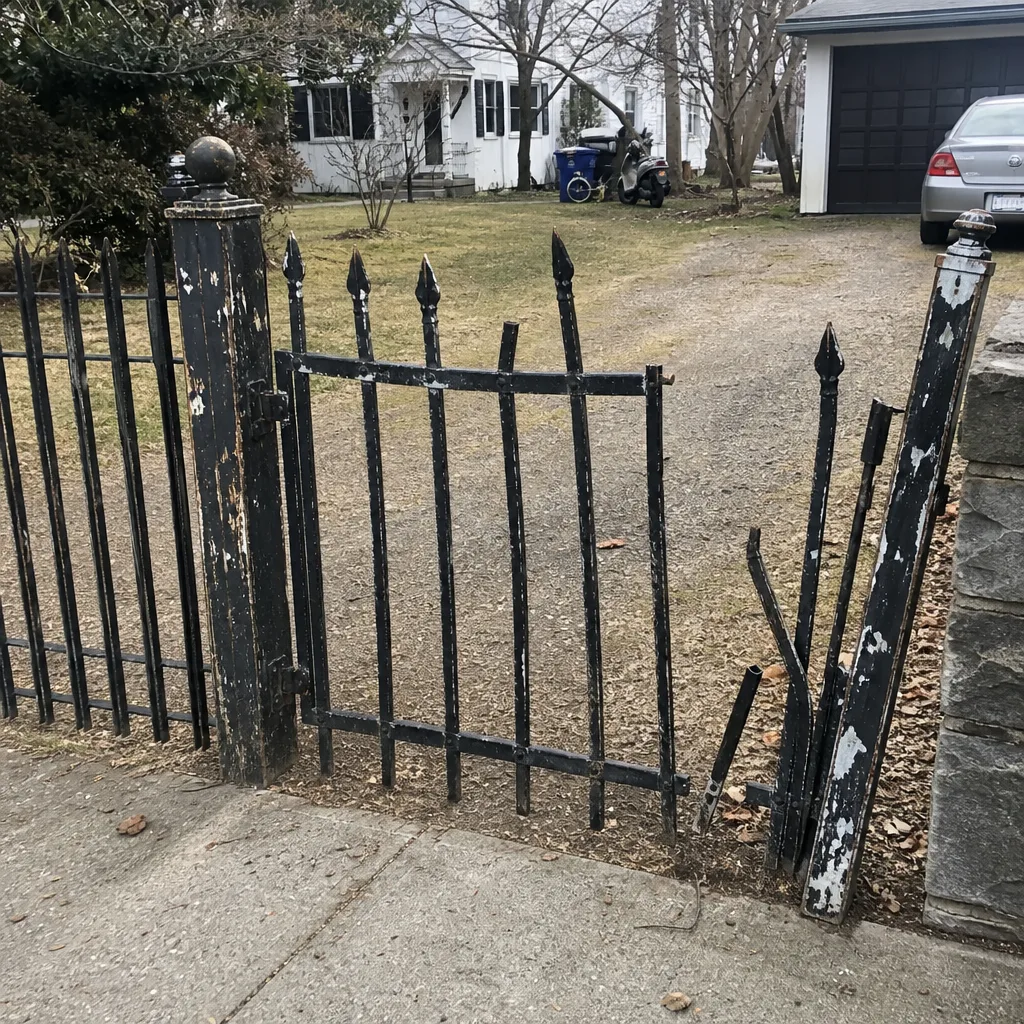 Before
 After
 Before
 After
 Before
 After
When to Call a Professional
Call a professional when a safety sensor fails to reverse the gate, when the operator makes grinding or straining noises, when the gate moves unevenly or stalls, when a control board acts erratic in heat or cold, or when you can’t tell what brand or model you have. These are tasks for trained technicians, because gate operators carry line voltage, capacitors store dangerous energy, and heavy panels and slides can crush. We answer 24/7, with fast dispatch from 7am to 7pm, Sunday through Friday. Arlington Gate Service offers free estimates in Arlington, so call (855) 349-3550 to book a visit. Our technicians have up to 10 years of experience, and every job is a gate job.
If you’re dealing with a failing electric or automated system, electric gate repair covers the diagnostic side of the schedule, and a specialist can tell you whether your issue belongs in a maintenance plan or a repair.
Frequently Asked Questions
Most gates need a full inspection twice a year, with monthly checks of hinges, tracks, and safety sensors on high-use systems. In Arlington, plan the two main visits around October (pre-winter) and March (post-freeze). Call (855) 349-3550 for an exact schedule for your gate.
Cycle-count maintenance is triggered by how many times the gate opens and closes, while calendar maintenance runs on fixed dates. Cycle count is better for busy commercial and HOA gates; calendar visits handle seasonal tasks like lubrication. Call (855) 349-3550 to figure out which fits yours.
Batteries, capacitors, and loop detectors are fixed-window items because they fail without warning. Hinges, rollers, and sensors are inspect-and-replace. Call (855) 349-3550 for a free estimate on replacing the fixed-window parts.
Yes, most manufacturers tie coverage to documented maintenance, and skipped lubrication or untested safety devices can void a claim on LiftMaster, Viking, and BFT lines. Keep a service log and have a trained technician do the scheduled tasks. Call (855) 349-3550 to book a warranty-safe inspection.
Grease hinges, pivot points, rollers, and the track before the first freeze, and check batteries and capacitors. That October visit is the highest-value one on the calendar. Call (855) 349-3550 to get on the schedule.
Inspect hinges, rollers, and the track for winter wear, shifting, and debris, then re-lubricate and clear the track. Do this in March before heavy spring use. Call (855) 349-3550 if anything tests outside spec.
The Bottom Line
The right gate maintenance schedule is built around your gate’s actual workload and the seasons that stress it, not a generic quarterly checklist. Start with cycle-count logic for heavy-use systems, run the October pre-winter lube and the March post-freeze inspection, replace batteries, capacitors, and loop detectors on fixed windows, and keep a service log a technician can read. Do that, and you’re protecting both the equipment and its warranty. For a schedule matched to your system in Arlington Gate Service brings gate-only focus to every visit. For a free estimate, call (855) 349-3550. We answer 24/7. Fast dispatch from 7am to 7pm, Sunday through Friday.
Written by the team at Arlington Gate Service.
For the full range of gate services, see Arlington Gate Service.