
Last updated November 15, 2026
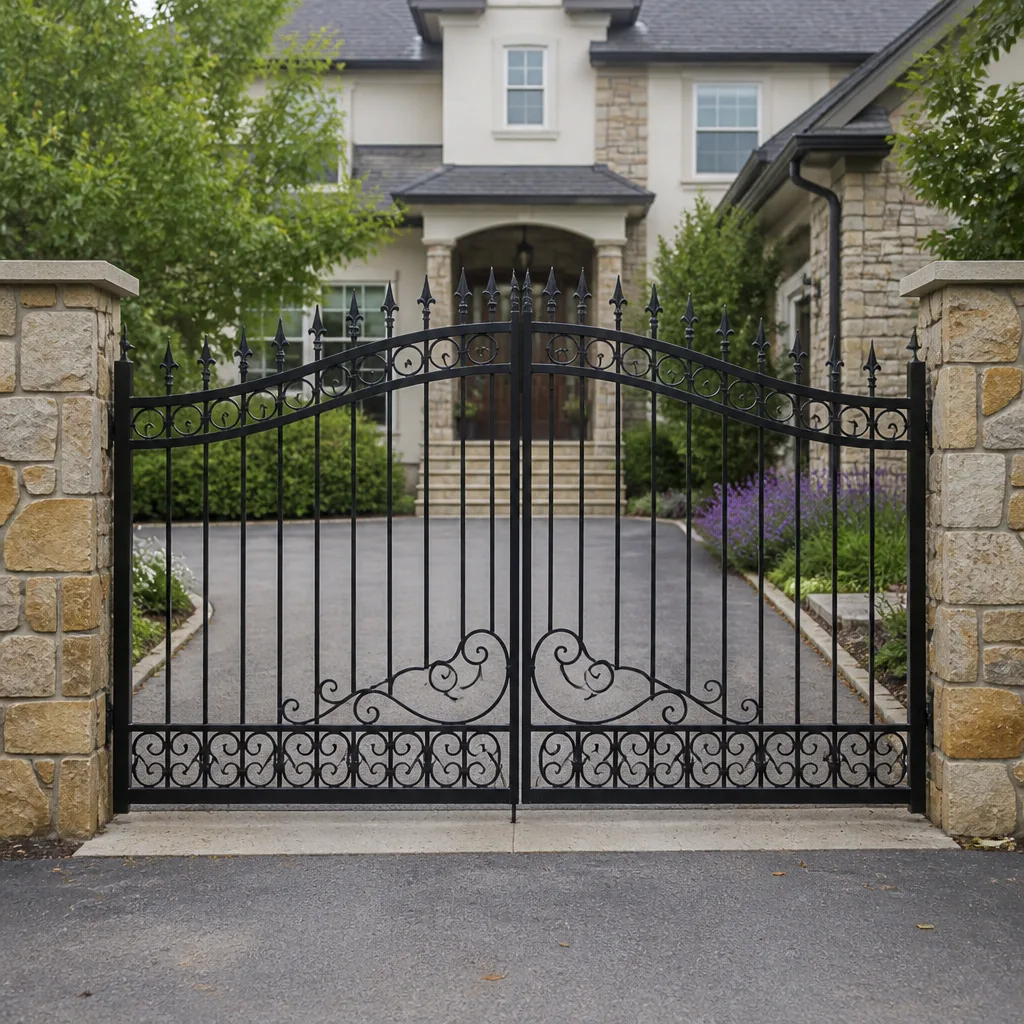 Wrought iron
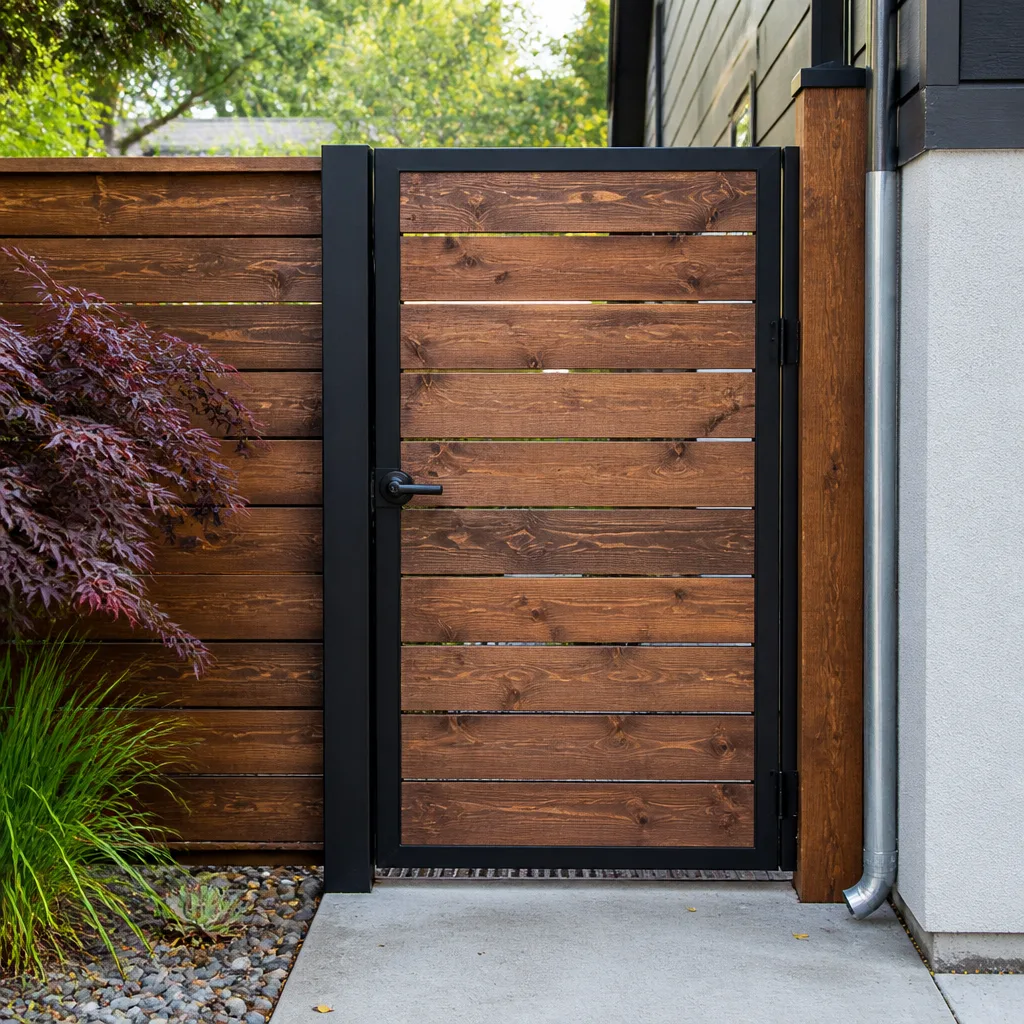 Wood & steel frame
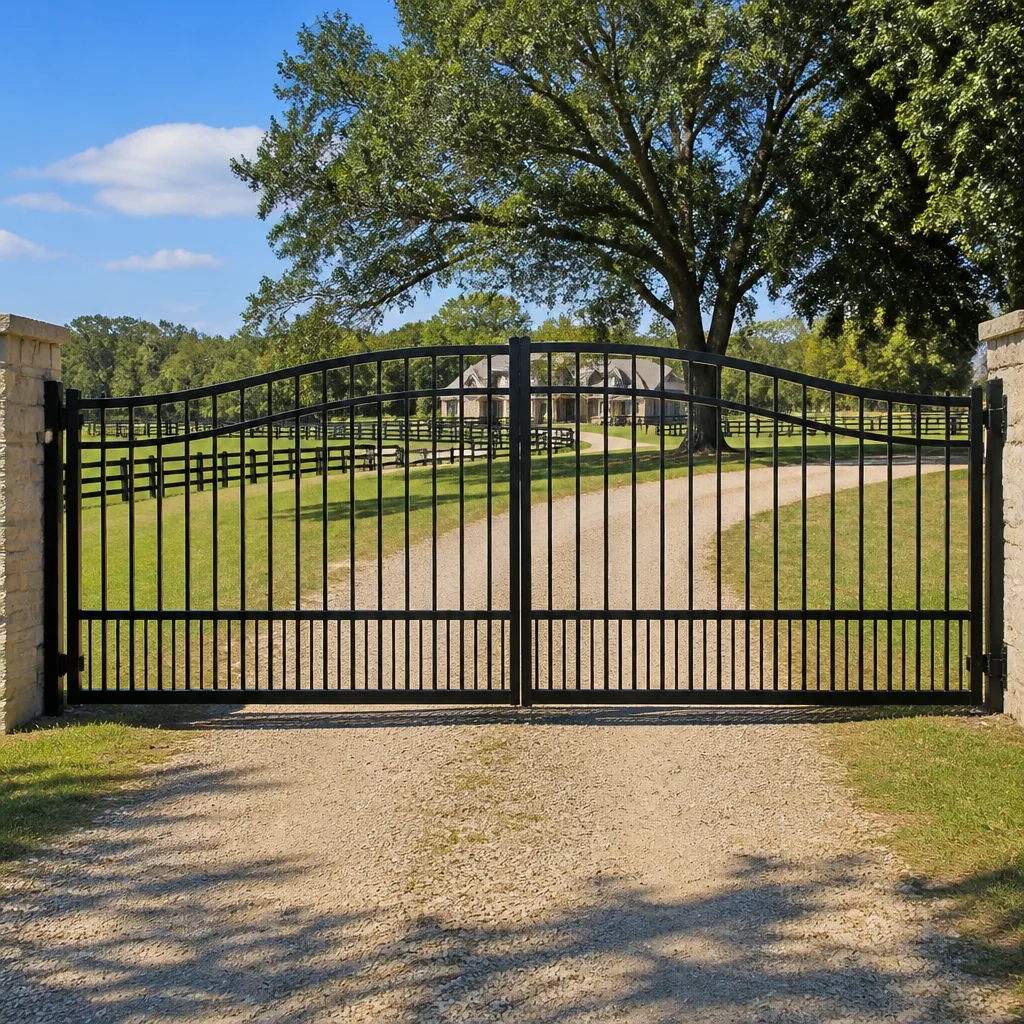 Farm & ranch
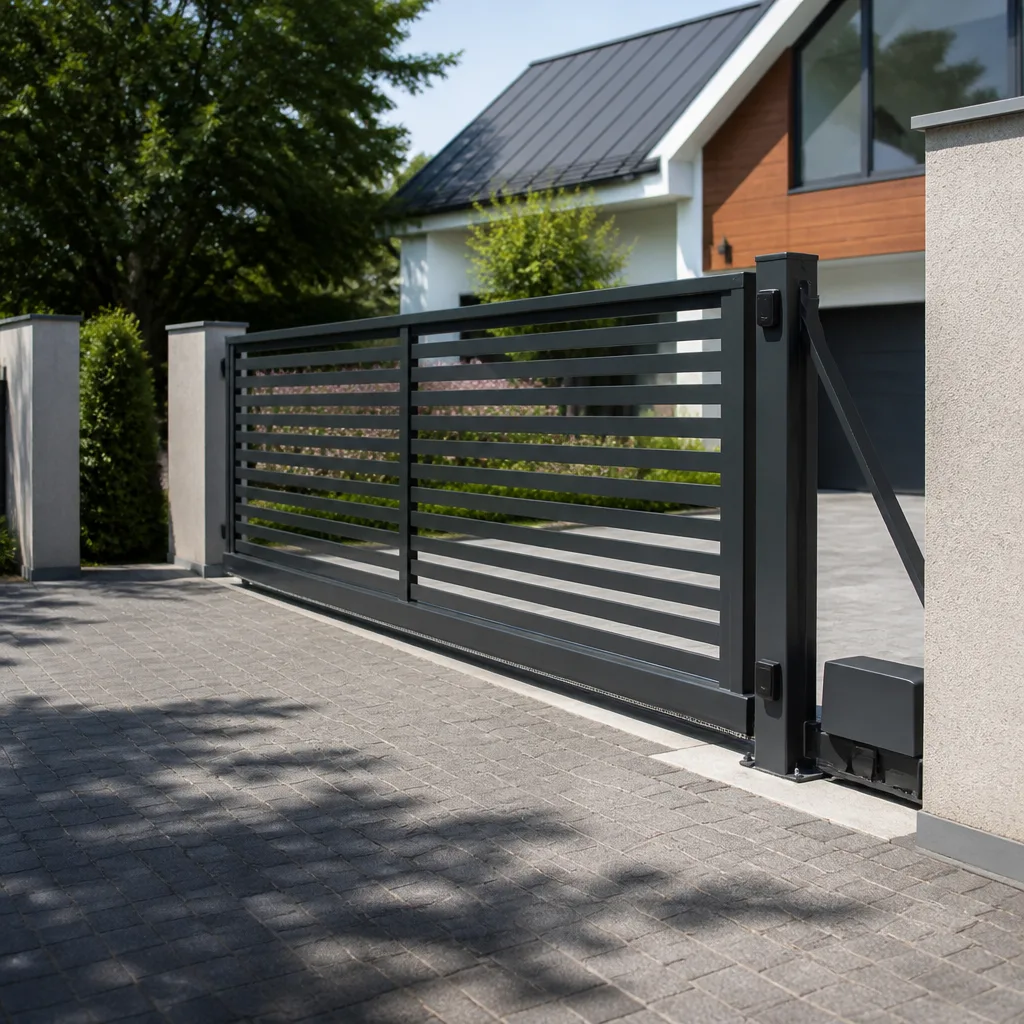 Sliding driveway gates
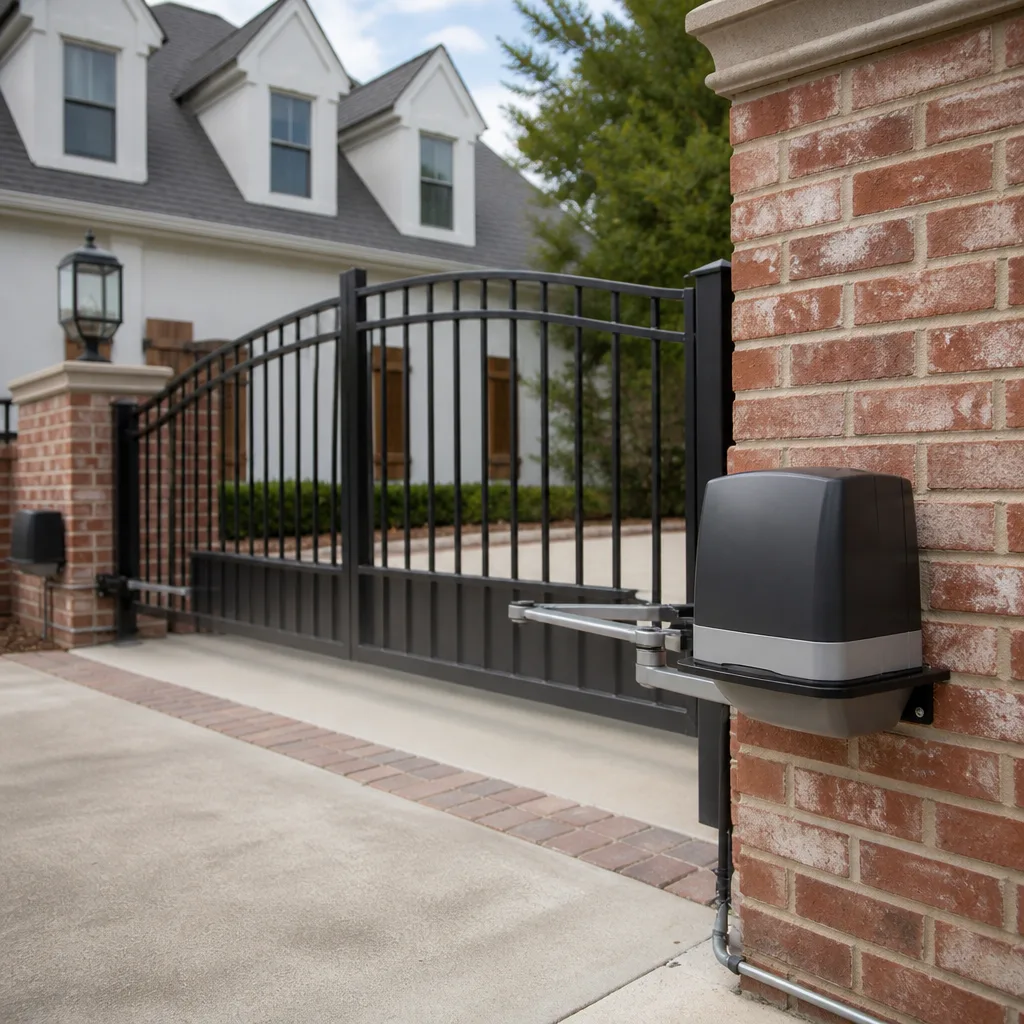 LiftMaster operators
Free on-site gate assessment - hinges, posts, and your LiftMaster or Nice gate operator checked before anything is quoted
The assessment is free and the quote is the invoice.
Get your free estimateThe Complete Guide to Gate Repair in Arlington
Most gate failures in Arlington don’t happen at random. They cluster. By neighborhood age, by soil, by gate style, by which side of the county you’re on. A wrought-iron pedestrian gate in front of a 1920s rowhouse in Lyon Village fails for different reasons than a modern aluminum slide gate at an HOA entry in Shirlington, and treating both the same way is the main reason gate callbacks happen. A hinge fix on a gate whose post has heaved is a temporary repair dressed up as a permanent one. This guide walks through the actual failure patterns we see across Arlington, how the seasons change the diagnosis, why electric gate problems so often trace back to buried low-voltage wiring, and how to tell a standalone repair from the early warning of a post or foundation problem.
Quick Answer
Gate repair in Arlington means diagnosing the specific failure on your gate – not a generic adjustment. The most common causes are post movement from clay-heavy soil, hinge and latch wear on older wrought-iron pedestrian gates, operator and control-board faults on automated systems, and low-voltage wiring damaged by landscaping or moisture. A trained technician inspects the gate, the posts, and the operator together, because the visible symptom is often not where the actual problem lives.
Styles & brands we work with
- Wrought iron
- Wood & steel frame
- Farm & ranch
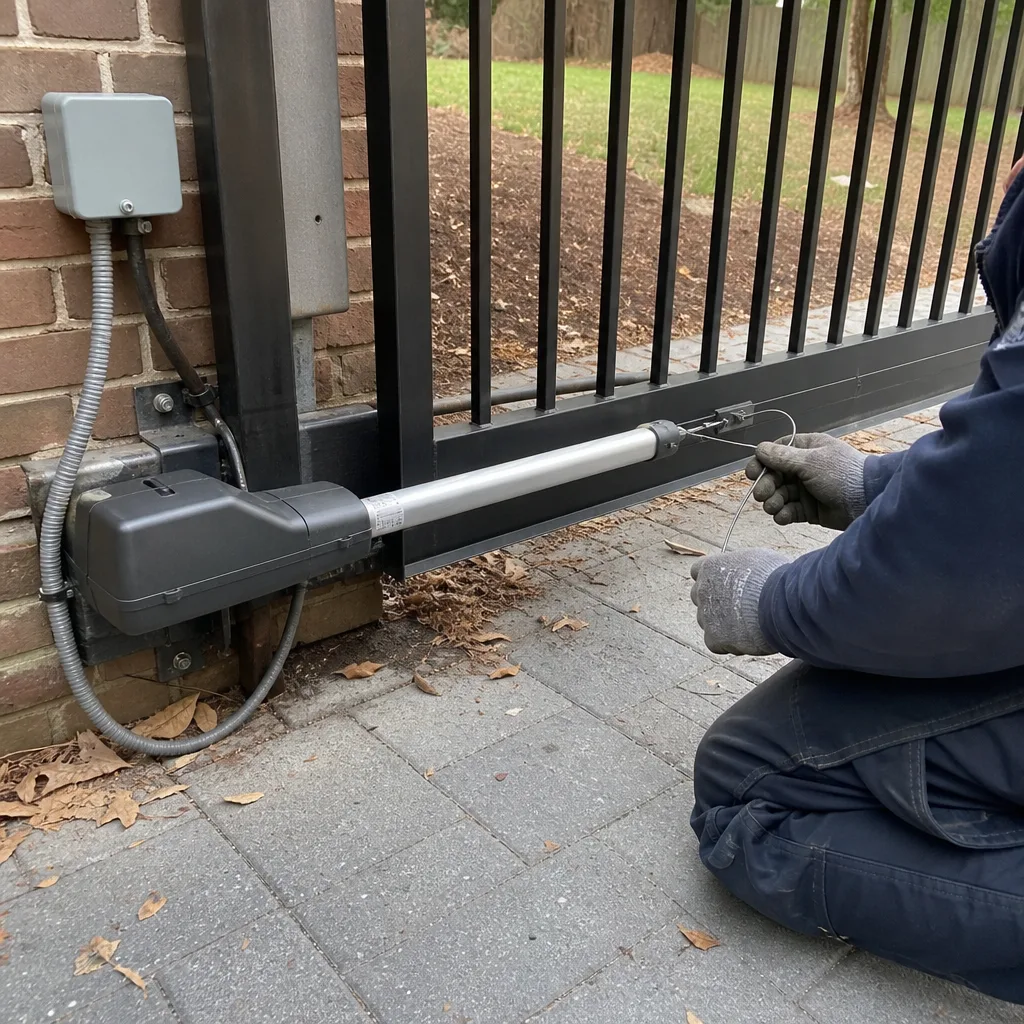
- Sliding driveway gates
- LiftMaster operators
Table of Contents
- Why Arlington’s Clay Soil Causes Gate Misalignment
- Wrought Iron vs. Aluminum Gates: Different Gates, Different Repairs
- Freeze-Thaw Winters vs. Humid Summers: What Fails When
- Electric Gate Repair and the Buried Wiring Problem
- Repair or Reinstall? How to Tell a Symptom From a Failure
- Brand-Specific Diagnosis Matters
- What You Can Safely Check Yourself
- How Gate Repair Pricing Works
Why Arlington’s Clay Soil Causes Gate Misalignment
Arlington sits on soil that holds a lot of clay, and clay does two things that gates hate: it swells when wet and shrinks when dry. A gate post set in that soil doesn’t stay where it was planted. It lifts, tilts, and rotates by fractions of an inch over a season, and those fractions add up. The gate sags, drags on the ground, or stops latching cleanly. Homeowners often assume the hinges have worn out. Sometimes they have. But on a gate that’s misaligned and the hinges look fine, the post is usually the culprit.
This matters because the fix is completely different. Tightening hinges on a heaved post buys you a few weeks. The right repair means evaluating the post footing, the depth it was set to, the drainage around it, and whether the gate needs to be rehung against a corrected post line. Poor drainage makes it worse – water pooling at the base of a post accelerates the swelling and shrinking cycle. In Arlington, gates at the bottom of a sloped driveway or next to a downspout outlet tend to move first.
What we look for on a misaligned gate:
- Is the post plumb? A level against the post face tells you in seconds.
- Is the gate dragging at the latch side, the hinge side, or along the bottom?
- Does the drag change after rain versus after a dry stretch?
- Is there standing water or soft ground near either post?
If the drag pattern changes with the weather, that’s soil movement, not hinge wear. For a full diagnosis of a gate that’s stopped lining up, gate repair should begin with the posts, not the hardware.
Wrought Iron vs. Aluminum Gates: Different Gates, Different Repairs
Walk through Bluemont or Lyon Village and you’ll see wrought-iron pedestrian gates on pre-war properties – heavy, often original, and built to last but not immune to time. Walk through the newer HOA communities closer to Shirlington and you’ll see aluminum swing and slide gates, lighter and more uniform, often automated. They fail in different ways and need different repairs.
Older Wrought-Iron Pedestrian Gates
These gates are heavy, and heavy gates stress their hinges and latches harder than anything else on the property. Common failures we see:
- Hinge pins worn or seized from years of use without lubrication.
- Latch mechanisms that no longer align because the gate has dropped slightly at the latch side.
- Rust at weld joints and at the base of the gate frame, especially where paint has chipped.
- Posts that have shifted, pulling the gate frame out of square.
Repair on these gates usually involves freeing or replacing hinge hardware, correcting the post, and treating rust before paint. Wrought iron can often be repaired rather than replaced – the metal is thick enough to work with.
Newer Aluminum Swing and Slide Gates
Aluminum gates are lighter, so the metal itself rarely fails. What fails is the mechanical and electrical side: rollers on slide gates, track alignment, operator hardware, and the control board on automated systems. Slide gates in particular are sensitive to track condition – a track that’s collected grit or shifted slightly will cause the gate to bind, and the operator will strain against it. A slide gate that runs rough usually has a track or roller problem, not a motor problem, and diagnosing which one it is saves you from replacing an operator that was fine.
The distinction matters for scope. A wrought-iron repair is often a metal and post job. An aluminum automated gate repair is often an operator and track job. The diagnosis has to match the gate.
Freeze-Thaw Winters vs. Humid Summers: What Fails When
Arlington gets both a real winter and a humid summer, and the season a gate fails in tells you a lot about what’s wrong. This is one of the more useful diagnostic shortcuts, and it’s why a technician will ask you when the problem started.
Winter and Early Spring: Post Movement and Hardware
Freeze-thaw cycles work the soil and the hardware. When the ground freezes and thaws repeatedly, posts move and gates go out of alignment. Metal contracts in cold, which can make a gate that was already marginal stop latching entirely. Locks and latches that were stiff in fall become seized. If your gate started dragging or stopped closing in January or February, the likely cause is post movement or cold-stiffened hardware.
Summer: Operators, Wiring, and Swelling
Humid summers stress the electrical side. Control boards and low-voltage wiring are sensitive to moisture, and a junction that’s been wet all spring can start faulting when the heat and humidity peak. Wooden components swell in summer humidity, changing clearances. If your automated gate started behaving erratically in July, suspect the operator, the control board, or moisture in the wiring before you suspect the gate itself.
The season of failure is a clue, not a verdict – but it points the diagnosis in the right direction before anyone opens a control box.
Electric Gate Repair and the Buried Wiring Problem
Automated gate repairs in Arlington often turn into wiring jobs, and that’s the part most homeowners don’t expect. Electric gates rely on low-voltage control wiring that runs from the operator to safety sensors, keypads, access hardware, and the power source. That wire is almost always buried – under landscaping, along a fence line, through a garden bed. When it fails, it fails invisibly.
A gate that opens partway and stops, a safety edge that won’t clear, a keypad that’s stopped responding – any of these can be a control board fault or a buried wire fault, and they look identical from the outside. The difference matters because the scope is different. A control board swap is contained. A buried wire fault means locating the break, which may mean pulling up landscaping or running a new path.
- Check the operator first. Open the control box and look for fault codes, tripped breakers, or visible moisture damage.
- Test the safety devices. Safety edges and sensors that won’t clear can mimic operator failure.
- Trace the low-voltage runs. If the operator is healthy and the safety devices test clean, the fault is likely in the wiring.
- Assess the wiring path. How the wire is buried and what’s above it determines how much work the repair involves.
This is why electric gate repair is a specialty, not a side task. The motor, the control board, the safety sensors, and the access hardware all have to be diagnosed together, and the wiring has to be understood as part of the system. A generalist will often replace a control board when the real problem is a corroded splice under a garden bed.
On the operator side, the brand matters. Arlington properties carry everything from residential-grade Mighty Mule and Ghost Controls systems on driveway gates to Viking and Linear units on multi-unit properties. Each has its own fault patterns, and a technician who knows the brand diagnoses faster than one reading the manual for the first time.
Repair or Reinstall? How to Tell a Symptom From a Failure
The hardest call on a gate is whether you’re looking at a repair or the leading edge of a reinstall. Getting it wrong is expensive in both directions – a reinstall on a gate that needed a hinge is waste, and a hinge fix on a gate whose post has failed is a callback waiting to happen. Here’s how we separate the two.
Signs It’s a Standalone Repair
- The gate is aligned but the hardware has worn – hinges, latches, rollers.
- The post is plumb and stable when tested.
- The gate swings or slides smoothly once the hardware is adjusted.
- The problem started suddenly rather than worsening over a season.
Signs of a Post or Foundation Failure
- The post is visibly out of plumb, or moves when you push against it.
- The gate drags consistently and the drag doesn’t respond to hinge adjustment.
- Multiple gates on the same property are out of alignment at once.
- There’s visible ground movement, erosion, or standing water at the post base.
- A repair made a season ago has failed again in the same way.
When two or more of the foundation signs are present, a standalone repair is unlikely to hold. The right move is a full evaluation of the post footing and, if it’s failed, a reinstall of the gate and post together. Arlington Gate Service handles both repair and new installation, so there’s no need to source a second contractor if the diagnosis turns to replacement. If you’re north of the county line, our Arlington coverage includes the neighborhoods from Ballston through to the Shirlington corridor.
Brand-Specific Diagnosis Matters
Gate operators are not interchangeable, and the fault patterns are brand-specific. A technician who works across a wide range of systems recognizes them faster. We work on nine major operator brands, from residential-grade systems like Mighty Mule and Ghost Controls through commercial operators like FAAC, BFT, DoorKing, and Viking, along with LiftMaster, Linear, and Elite.
Here’s what brand familiarity buys you on a diagnosis:
- Known fault codes. Each brand’s control board reports faults differently. Reading the code correctly is the difference between replacing the right part and replacing parts until the fault clears.
- Known failure patterns. Certain operators are known for certain weaknesses – a specific sensor that fails, a control board that’s sensitive to moisture, a limit switch that drifts.
- Correct parts. Getting the right replacement without a second visit.
- Correct safety devices. Safety edges and sensors have to match the operator’s protocol. A mismatched device will fault intermittently.
This is the practical reason we describe ourselves as gate specialists rather than a general service that happens to work on gates. When the diagnosis is brand-aware from the start, you get it right the first time instead of learning the brand on your own.
What You Can Safely Check Yourself
Some gate checks are safe and useful. Others are genuinely dangerous, and we want to be clear about the line.
Safe to Check
- Push against each post to see if it moves. A solid post shouldn’t shift.
- Check the gate for drag – open it halfway and let it rest, watching for sag.
- Look at the latch and hinges for visible wear, rust, or loose fittings.
- Listen for a change in the motor sound on an automated gate – grinding, straining, or clicking.
- Note when the problem started and whether it changes with the weather.
Not Safe to Check Yourself
Anything involving the operator’s power supply or wiring inside the control box should go to a trained professional. Gate operator wiring carries mains voltage on the supply side, and a gate that’s still powered can move without warning if a control fault clears. Heavy gate panels can crush, and a slide gate can come off its track. Don’t reach into a control box, don’t test live wiring, and don’t disable a safety edge to get the gate working. Those are the exact repairs that need a specialist.
The checks above are what you report to us when you call. They speed up the diagnosis and often point straight to the likely cause before anyone is on site.
How Gate Repair Pricing Works
Gate repair pricing is set per job by the written estimate, so there’s no single number. What we can give you is a clear picture of what shapes the estimate, so there are no surprises.
- Repair scope. A hinge or latch replacement is a contained job. A wiring fault under landscaping is not.
- Operator and brand. Control boards, safety devices, and access hardware vary by brand and system.
- Post and foundation work. Post correction or a reinstall is a different scope from a hardware repair.
- Access and wiring path. How much landscaping or paving is over the low-voltage runs affects the labor on wiring repairs.
- Property type. A single pedestrian gate is a different job from a multi-unit swing gate system.
The price is quoted and agreed before any work starts, and the written estimate sets the final price. Estimates are free. Our technicians have up to 10 years of experience across residential and commercial gate systems, so the diagnosis is grounded in what’s actually on your gate.
Common Mistakes to Avoid
- Assuming a sag is a hinge problem. In Arlington, a sag that worsens after wet weather is usually a post issue, and tightening hinges won’t fix it.
- Replacing an operator when the problem is the track. A slide gate that binds is often a track or roller issue, and a new operator on a bad track will fail the same way.
- Ignoring water near the posts. Arlington’s clay soil moves more when it’s saturated, so poor drainage at a gate post is a repair waiting to happen.
- Calling a generalist for an automated gate. Electric gate repair means the motor, control board, safety sensors, and buried wiring – most general trades subcontract it out, and the diagnosis suffers.
- Disabling a safety edge to keep the gate moving. It’s the most common dangerous shortcut. A gate without working safety devices can crush, and it needs a trained technician to sort out.
- Fixing the same failure every season. If a repair has failed twice, the underlying cause is post or foundation movement, and the scope needs to change.
- Assuming one gate’s fix applies to another. A wrought-iron pedestrian gate in Lyon Village and an aluminum slide gate in an HOA entry need different repairs, and copying the fix is why callbacks happen.
See the difference
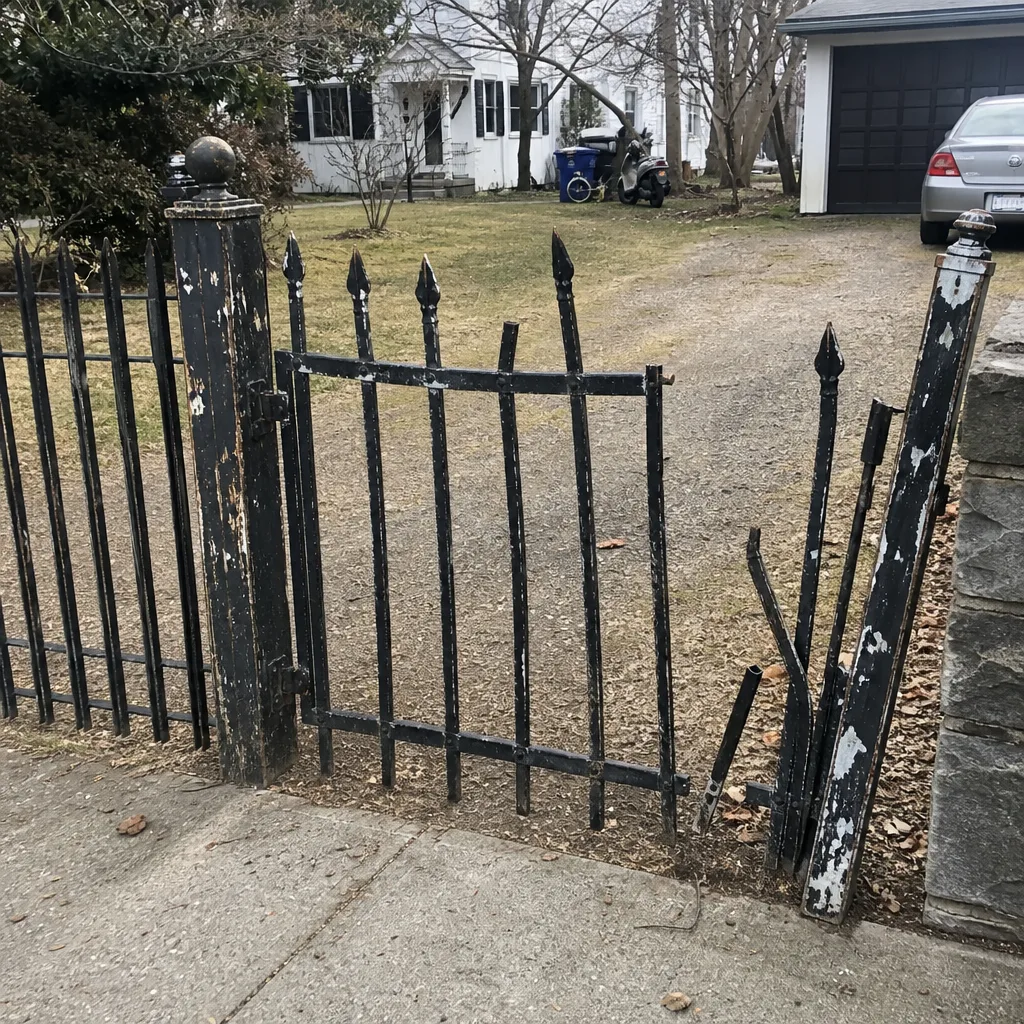 Before
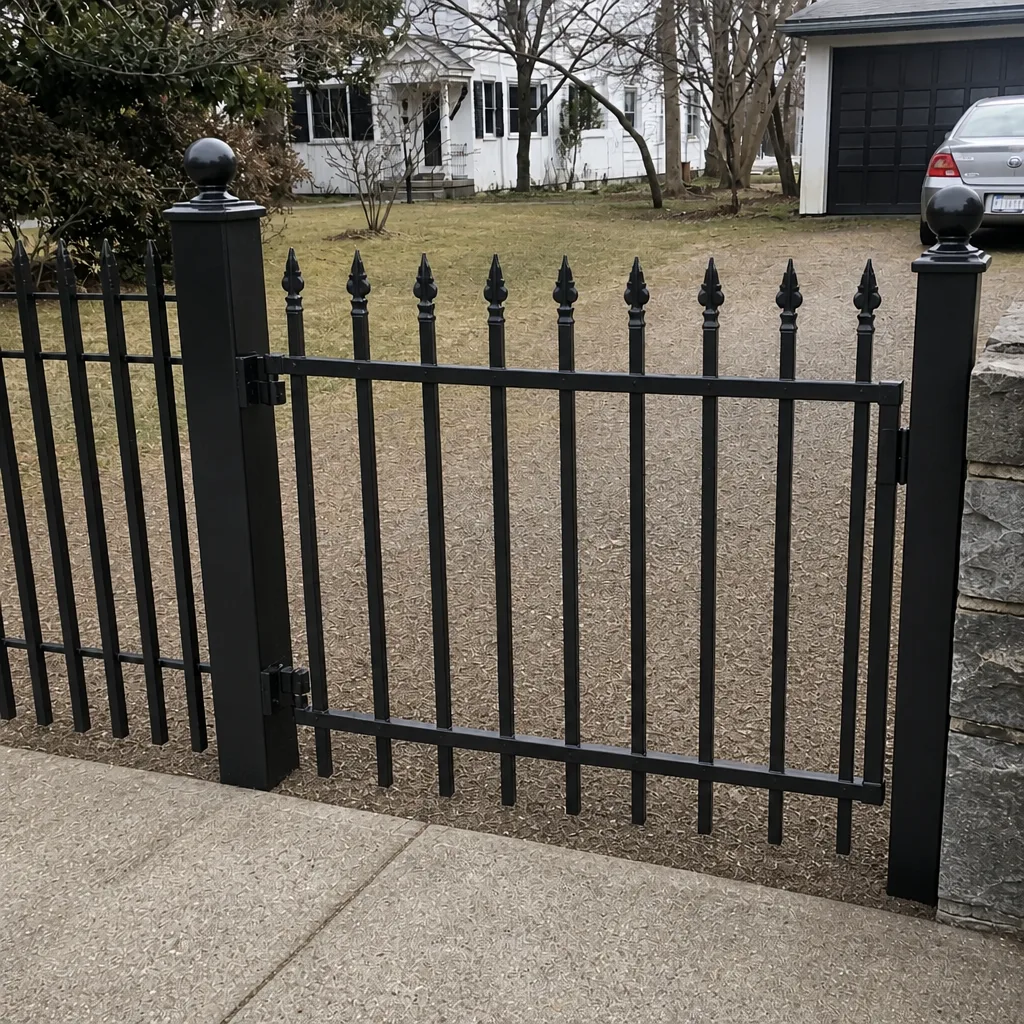 After
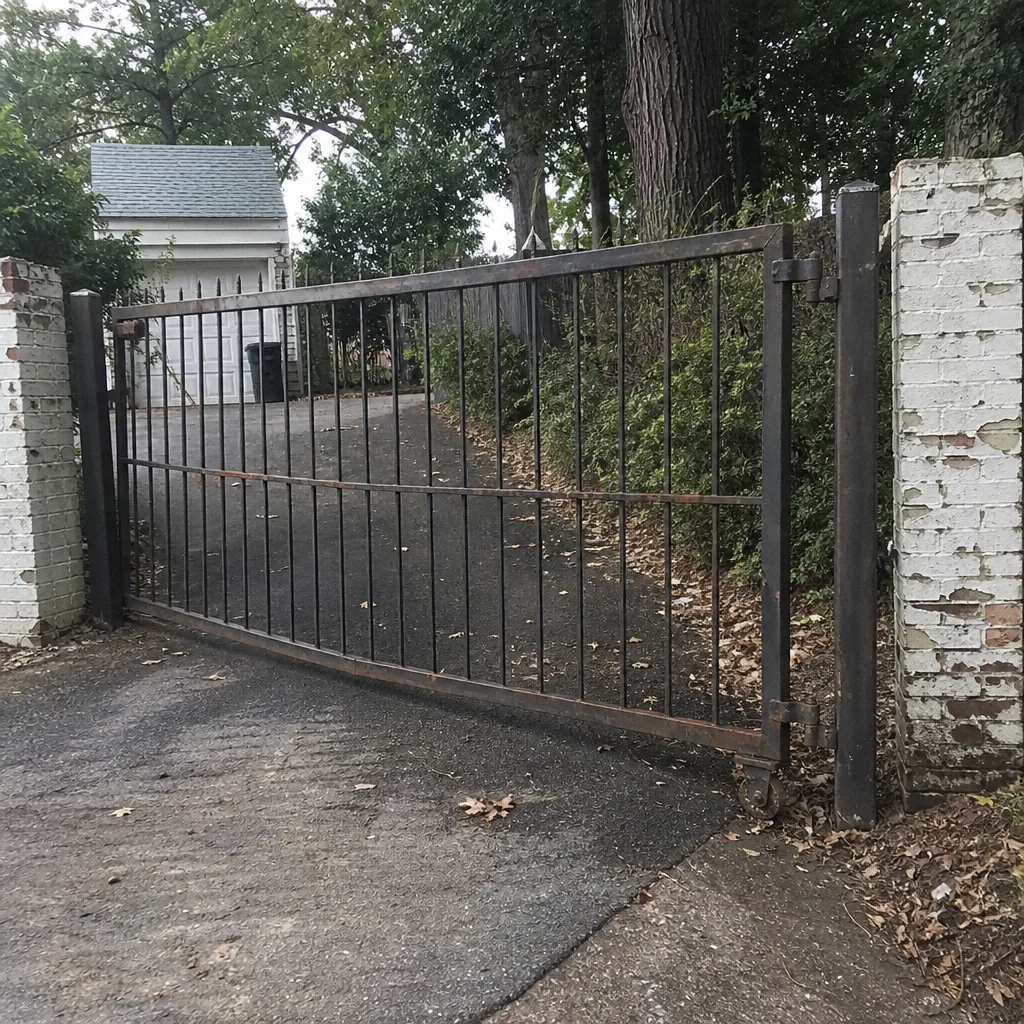 Before
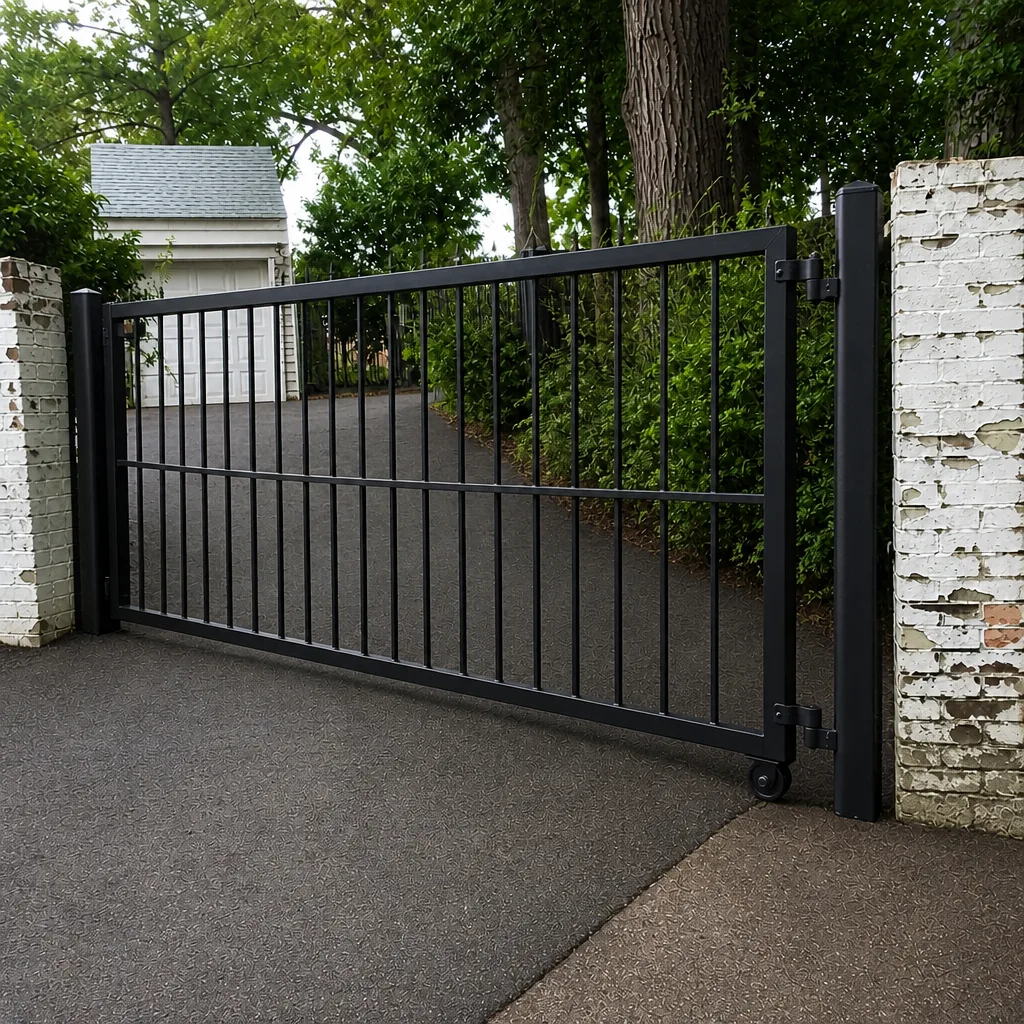 After
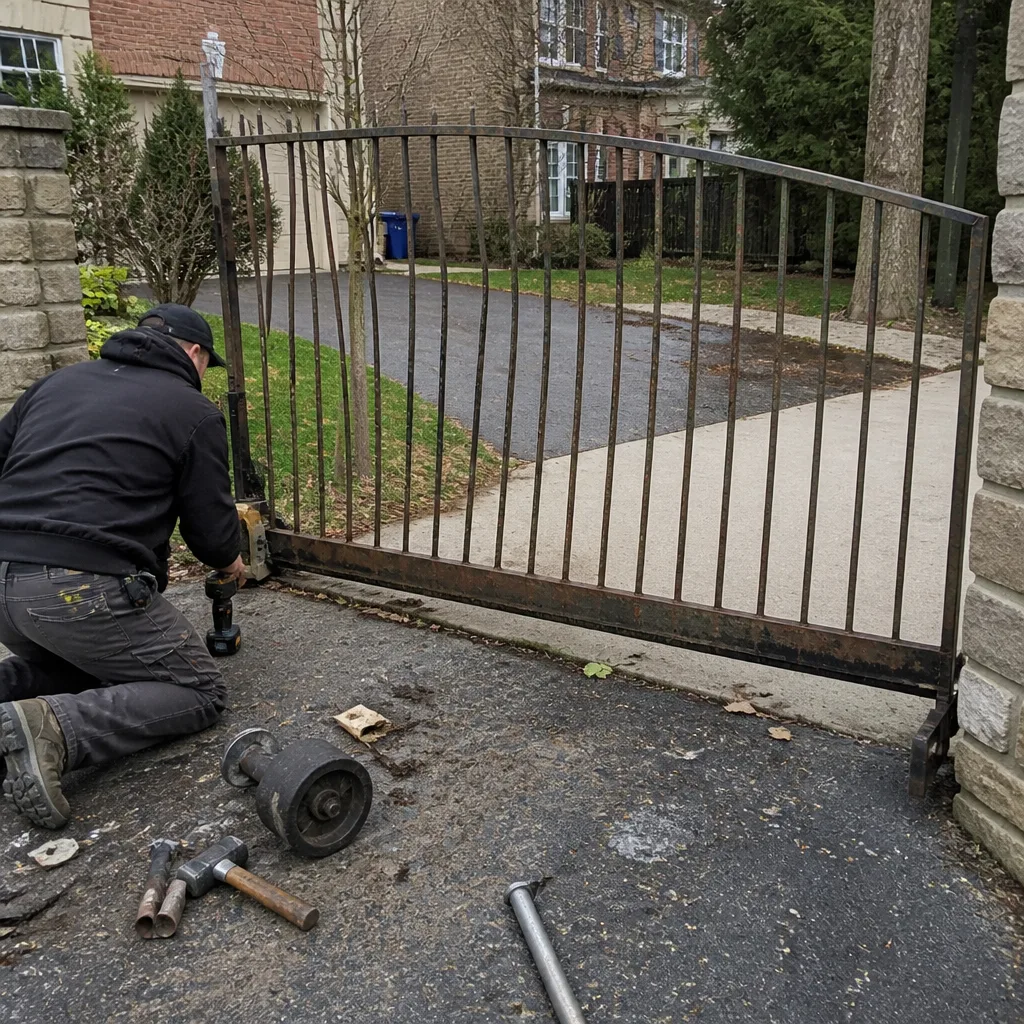 Before
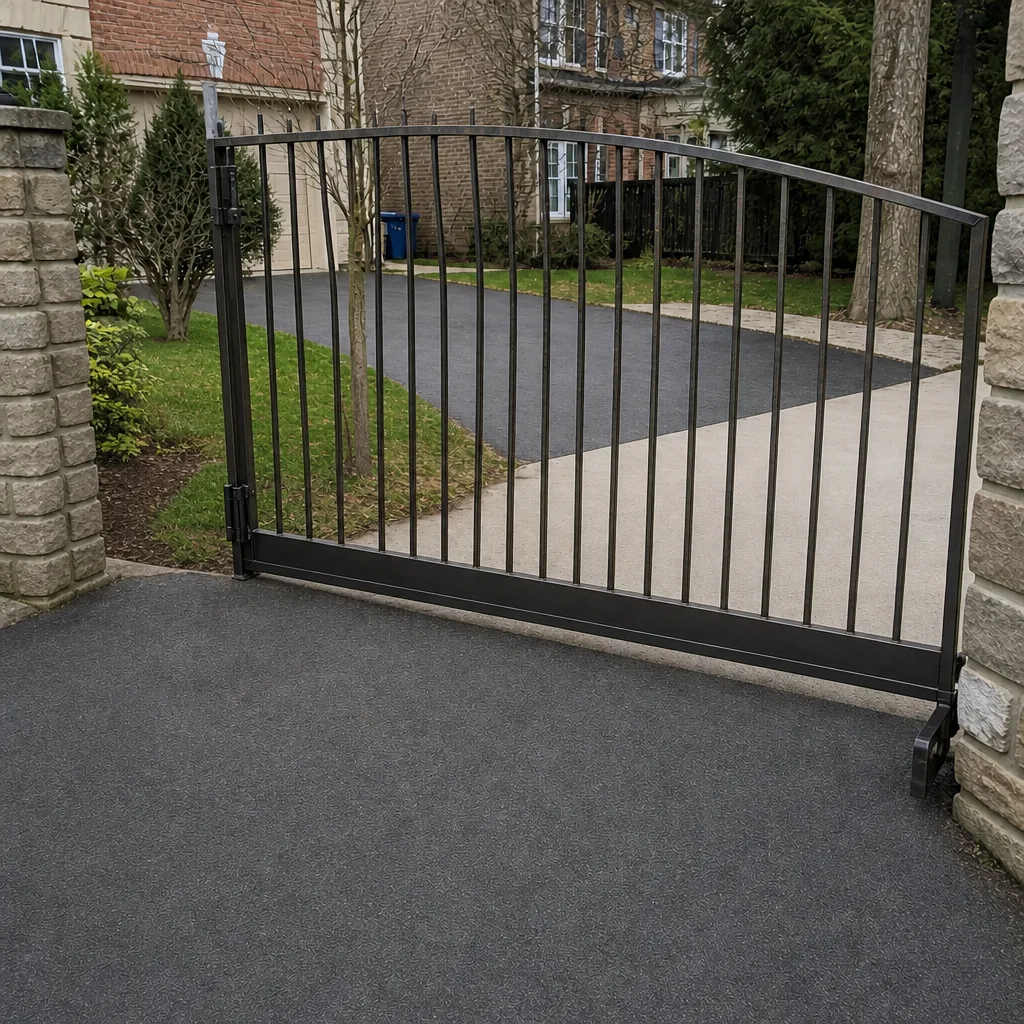 After
When to Call a Professional
Call us when a gate stops latching or dragging and the cause isn’t obvious after the safe checks. Call when an automated gate behaves erratically, particularly if it started in humid weather or after a wet stretch – that points to the operator or the buried wiring. Call when a post moves, or when a repair you had done has failed the same way twice. Call when a slide gate binds or a swing gate drags, and call before you reach into a control box. Arlington Gate Service offers free estimates in Arlington – call (855) 349-3550. We answer 24/7 and offer fast dispatch from 7am to 7pm.
Frequently Asked Questions
Gate repair is priced per job by the written estimate, so the cost depends on the scope – a hinge or latch replacement is far less than a wiring repair under landscaping or a post correction. The price is quoted and agreed before any work starts. Call (855) 349-3550 for a free estimate in Arlington.
Many gate repairs can be handled the same day if the parts are on hand, though wiring and post work may need more. We offer fast dispatch from 7am to 7pm, and estimates are free. Call (855) 349-3550 to book a visit.
A drag that changes with the weather usually means post movement from Arlington’s clay-heavy soil, not hinge wear. Wet soil swells and shifts the post, and the gate goes out of alignment. A technician should evaluate the post and footing rather than adjust the hardware.
Yes – electric gate repair covers the operator, the control board, the safety sensors, the access hardware, and the low-voltage wiring. We diagnose the whole system, so a wiring fault isn’t mistaken for a control board failure. Call (855) 349-3550 for a free estimate.
We work on nine major brands – LiftMaster, FAAC, BFT, Linear, Viking, Ghost Controls, DoorKing, Elite, and Mighty Mule – covering residential through commercial systems. When we recognize the brand, we recognize the fault patterns faster, and the diagnosis is more accurate from the first visit.
A gate that’s aligned but has worn hardware is usually a repair, while a gate with a moving post, consistent drag that ignores hinge adjustment, or repeat failures is showing post or foundation issues and likely needs a reinstall. If two or more foundation signs are present, a standalone repair won’t hold. Call (855) 349-3550 for an on-site evaluation.
The Bottom Line
Gate failures in Arlington follow patterns. Clay soil moves posts. Older wrought-iron pedestrian gates wear at the hinges and latch. Newer aluminum and automated gates fail electrically – at the operator, the control board, the safety devices, or the low-voltage wiring buried under landscaping. The season of failure points to the cause, and a repair is only as good as the diagnosis behind it. A hinge fix on a heaved post is a callback, and a new operator on a binding track is wasted money. The gate specialists at Arlington Gate Service work on your brand across residential and commercial systems, with technicians who have up to 10 years of experience. Call (855) 349-3550 for a free estimate. We answer 24/7 and offer fast dispatch from 7am to 7pm, Sunday through Friday.
Written by the team at Arlington Gate Service.